
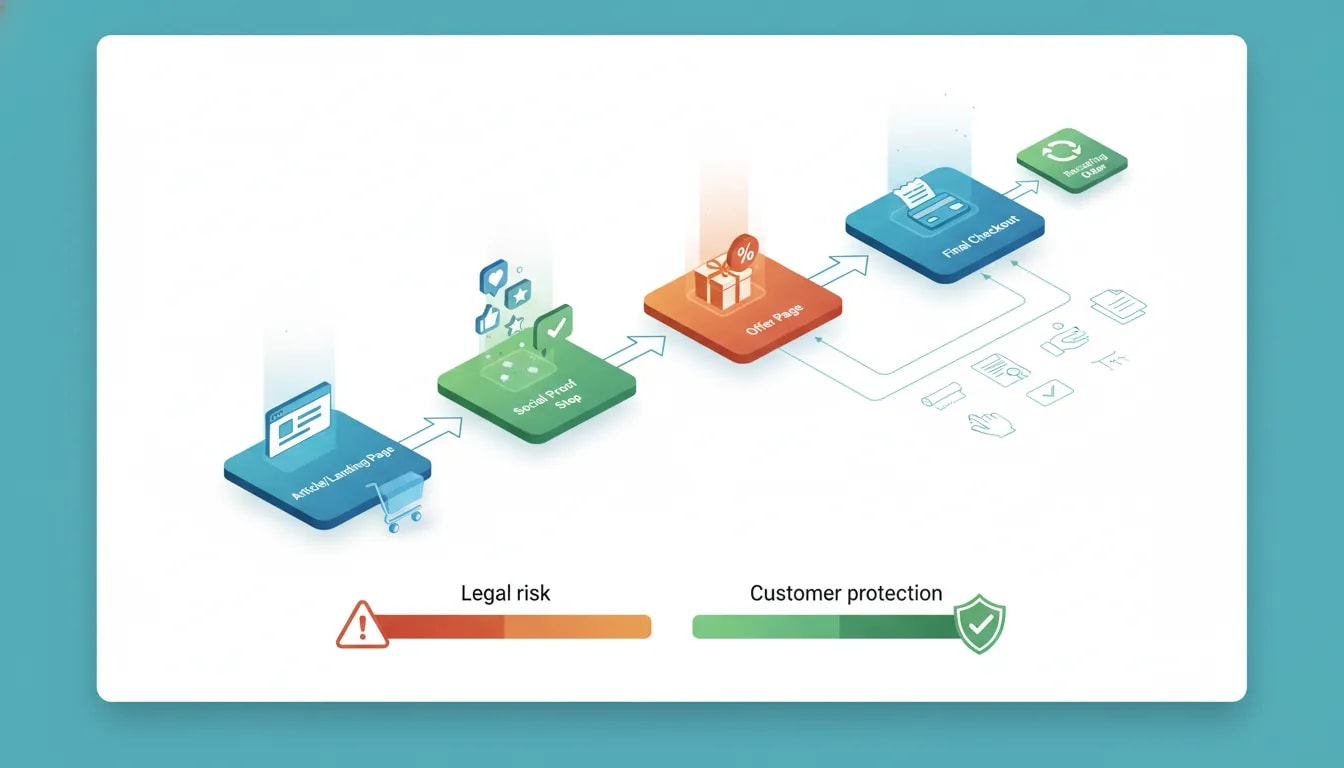
A new wave of sellers has changed how many products are bought and sold online. They use sharp margin math, unusual ad channels, multi-stage landing pages, and aggressive subscription flows. Some tactics raise legal and brand risk. Others are plain good marketing that mainstream stores can adopt without harm. This guide explains the tactics, the risks and the exact steps a legitimate retailer should take to respond and to test new traffic sources safely.
Table of Contents
- What this trend is and why it matters
- Key concepts to know
- Why small cost products are winning the test game
- Where these sellers buy traffic and why it cuts ad cost
- How multi stage funnels lift conversion rates
- Subscription flows that look like profit machines and why they are a red flag
- Product sourcing and safety for ingestible and topical items
- How payment processor and account evasion works and what it means
- Practical steps for legitimate ecommerce sellers
- How to design high converting ethical funnels
- How to evaluate a new traffic channel fast
- Common mistakes and how to avoid them
- Metrics to watch daily and weekly
- What regulators and payment processors look for
- How to respond if you find competitors using shady tactics
- Test plan template you can copy now
- Checklist for launching a product ethically in a competitive environment
- Long term strategy for brands that want to stay ahead
- Summary and key takeaways
- FAQ
- Final note
What this trend is and why it matters
In short, a large group of experienced affiliate marketers has moved into ecommerce. They favor very low cost products, extreme ad arbitrage and highly optimized conversion funnels. The result is a fast moving set of playbooks that drive sales at low ad cost. That can beat traditional brands that still rely on standard social ads and single page product listings.
This matters for three groups:
- Independent sellers who need to protect margins and reputation.
- Brand owners who face new traffic tactics and potential unfair competition.
- Consumers who may get lower quality products or trapped subscriptions.
Key concepts to know
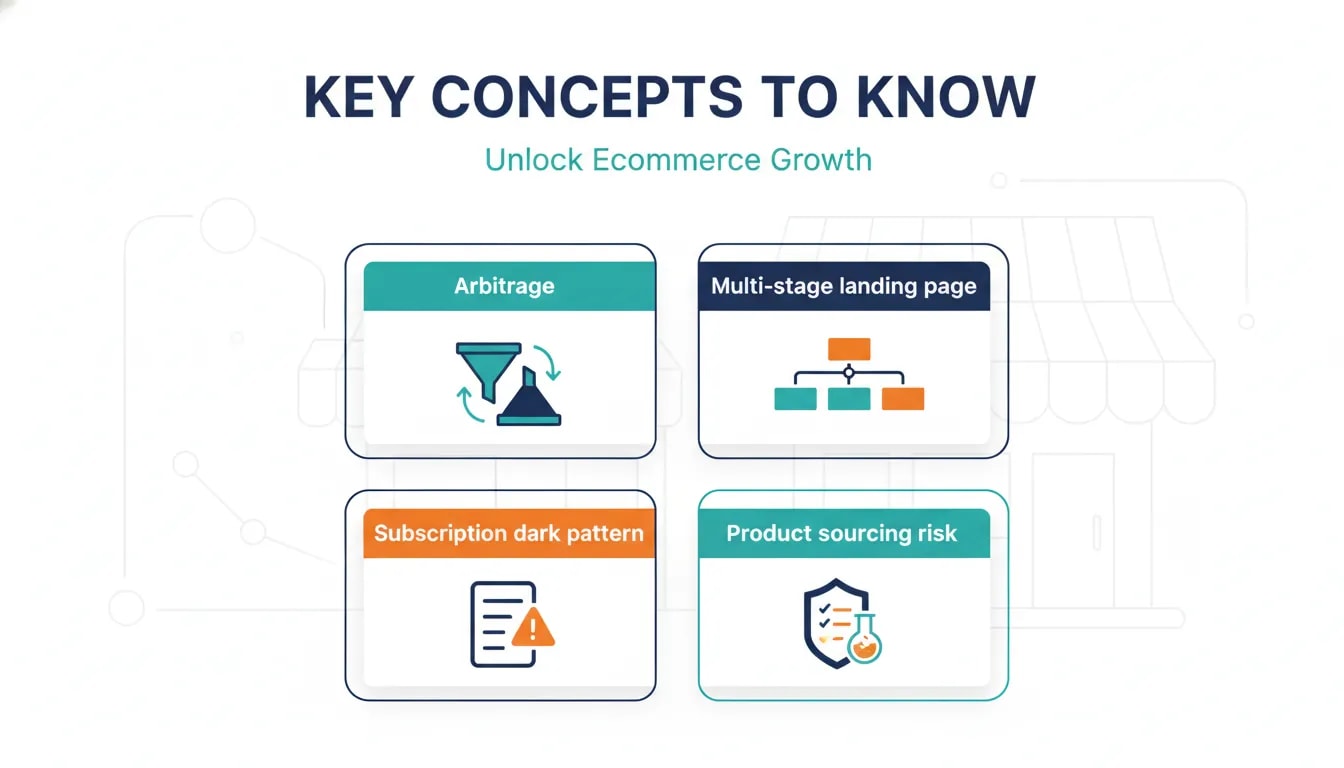
Before we get into tactics, learn these short definitions.
- Arbitrage Buying cheap traffic on one channel and monetizing it at a higher rate on another.
- Multi stage landing page A funnel where traffic sees several pages that build desire before showing price.
- Subscription dark pattern A checkout design that causes users to join a recurring plan without clear consent.
- Product sourcing risk The chance a product lacks the ingredients, purity or safety a label claims.
Why small cost products are winning the test game
A simple bit of arithmetic explains a lot. If you buy a unit for one dollar and sell it for twenty dollars, you can spend up to nineteen dollars to acquire that customer and still break even. That gives you huge room to test ads and landing pages.
Compare that to a product that costs ten dollars and sells for forty dollars. The profit per unit is larger, but your cash ties up in inventory. You cannot test many products at once. With low cost inventory you can try dozens of ads and dozens of products using the same working capital.
The practical outcome:
- Fast test cycles. You can run 50 to 100 creatives across multiple funnels without large capital.
- High tolerance for poor conversions while you find a winner.
- Ability to scale quickly once a funnel and offer work.
Where these sellers buy traffic and why it cuts ad cost
Traditional ecommerce ad buys concentrate on a handful of major platforms. That raises prices. The newer players hunt for low competition channels. That can produce much lower CPM and CPC for the same or similar audiences.
Common alternative channels they test include:
- Adult websites and networks with high inventory and low competition.
- Obscure ad networks that sell direct inventory on niche publishers.
- Vertical forums and niche sub communities such as specialty hobby forums or subgroups on message boards.
- Podcast ad slots in narrow verticals where listeners match the offer.
- Placements on content aggregation sites and aggregator networks that most mainstream advertisers ignore.
The logic is simple. Less competition for ad space means lower prices. A low CPM multiplies the reach you can buy for the same ad spend. If your conversion funnel converts strongly, the economics can be very compelling.
Risks of alternative traffic
Alternative channels bring risk. They can hurt brand image if the placement is inappropriate. Some networks have low quality inventory that drives high bounce rates. Many ad platforms limit or bar certain product categories like supplements or beauty claims. Finally, ad networks may not allow friendly payment verification or may block accounts when they see questionable content.

How multi-stage funnels lift conversion rates
Most affiliate style sellers do not send traffic directly to a product page. They use a series of pages that warm the visitor before showing price. These stages can push conversion rates far higher than a single product listing.
A typical funnel looks like this:
- Soft entry content such as an article or a problem focused piece that creates interest.
- Case studies or testimonials as social proof that the product can work.
- Detail pages that explain benefits and use cases without price.
- Limited time offer pages that add urgency and scarcity.
- Final order page with upsells and subscription offers.
Why it works:
- It reduces friction. Visitors arrive informed and more likely to act.
- It builds trust via social proof and perceived authority.
- It segments traffic. Higher intent visitors get shown the product with offer framing.
Best practice for ethical use:
- Use true testimonials and disclose if content is sponsored.
- Do not mislead about research or clinical claims.
- Keep the path short enough that it does not become a trap.
Subscription flows that look like profit machines and why they are a red flag
Recurring revenue is valuable. Some sellers design checkout flows to maximize recurring billing at any cost. That creates short term profit but long term trouble.
Common tricks to watch for:
- Pre checked recurring boxes that are hard to notice.
- Text that blends into the background or uses tiny fonts to hide subscription terms.
- Company names on statements that are designed to look like popular services so charges go unnoticed.
- Complex cancellation paths with no clear way to stop future charges.
Legal and reputational consequences:
- Regulators view deceptive checkout design as unfair practice. That can trigger fines and enforcement.
- Payment processors return disputes and chargebacks which raise processing fees or lead to account holds.
- Public exposure can destroy trust and kill lifetime value.
How to build a fair recurring plan
If you want recurring revenue and to keep long term customers, follow these rules:
- Make subscription terms obvious on the page and at checkout.
- Use explicit consent rather than pre checked boxes.
- Show the billing name that will appear on the card.
- Offer one click cancellation in the account area or clear email and phone options for quick service.
- Send a reminder email before the first renewal and include a clear unsubscribe link.

Product sourcing and safety for ingestible and topical items
The biggest product risk appears in supplements and beauty products. These categories can have high margins and strong conversion. They also carry safety risk if a product lacks testing or accurate labeling.
Key facts to know:
- Dietary supplements are not reviewed by many regulators before they go to market. That leaves the door open for low quality suppliers.
- Some factory listings online show identical photos and labels that many sellers repurpose. That makes it hard to know who made what.
- Third party lab testing is the only reliable way to verify active ingredient levels and contaminants.
Minimum product safety checklist
Before you sell an ingestible or topical product, confirm these items.
- Request a Certificate of Analysis or COA for the exact batch you will ship.
- Order independent lab testing for heavy metals, microbes and active ingredient content.
- Confirm the factory holds current Good Manufacturing Practice certification from a recognized auditor.
- Review label claims and avoid any language that implies diagnosis or treatment of disease.
- Keep batch level records and supplier contact info for traceability.
Typical cost and timeline:
- Basic third party lab screens can run a few hundred to a few thousand dollars depending on tests.
- Turnaround time for labs is often three to ten business days.
How payment processor and account evasion works and what it means
When a merchant violates processor rules, processors can hold funds or terminate accounts. Some sellers plan for that outcome and build backup systems.
Common strategies used by high risk operators:
- Multiple merchant accounts under different company names and locations.
- Offshore entities that accept payments outside the primary legal jurisdiction.
- Rotation of acquiring banks and processors to avoid long term flags.
Why this matters to you:
- Processors tighten rules when they see patterns. That makes onboarding harder for legitimate sellers in the same vertical.
- High chargeback rates and regulatory actions can raise fees for entire categories.
- Operating above the law exposes owners to civil and criminal risk depending on conduct.

Practical steps for legitimate ecommerce sellers
If you run a legitimate store, you need a dual approach. First adopt the good tactics that improve efficiency. Second avoid the bad tactics that risk brand damage. Below is a prioritized plan you can follow in the next 30 days.
Day one to seven: quick wins
- Audit your checkout for clarity. Remove pre checked boxes and add a summary that shows billing cadence and first charge.
- Map every line item that will appear on a card statement. Make the descriptor clear and match it to your brand name.
- Test one multi stage funnel built from existing product copy. Create a short educational entry page, a testimonial page and a final offer page.
- Set up a simple analytics event to track funnel conversion and drop off by page.
Day eight to fourteen: traffic and testing
- Find one under used traffic source where your competitors are not active. This could be a niche podcast, a niche forum or a small ad network.
- Run a low spend test with $50 to $200 to measure CPM and conversion.
- Run creative tests across 4 to 6 variations of ad copy or creative to see what resonates.
Day fifteen to thirty: control for quality and scale
- Order third party testing if you sell ingestible or topical products.
- Document supplier audits and store COAs where customer service can access them.
- If a funnel works, scale incrementally and monitor return and refund rates closely.
- Set up automatic emails for the first 30 days post purchase to reduce refunds and solve problems early.
How to design high converting ethical funnels
You can use many of the high converting funnel techniques without harm. Follow this simple framework.
- Problem first Start with a short article or page that frames a real pain the product solves.
- Proof next Use customer stories, before and after data or simple case profiles. Verify you have rights to publish the stories.
- Benefit detail Explain how the product works. List features and expected results with a realistic timeline.
- Transparent offer Show price, shipping and tax up front. Provide a simple money back policy and link to it clearly.
- Simple checkout Make purchasing fast. Add trust signals such as secure checkout badge and clear contact options.
How to evaluate a new traffic channel fast
Use this quick scoring sheet when you test a new channel with a small spend.
- Cost CPM and CPC compared to baseline.
- Conversion Funnel conversion from first page to purchase.
- Quality Refund rate and complaint rate for this source.
- Scale Is there room to increase spend without price rising sharply?
- Brand fit Does the placement help or hurt brand perception?
Score each item on a one to five scale. If cost and conversion are strong but quality is poor, pause scaling until you fix the product or offer.

Common mistakes and how to avoid them
Below are several frequent errors and simple fixes.
- Mistake Relying only on one ad platform.
Fix Diversify early. Test two or three distinct channels so a change in one platform does not end the business.
- Mistake Shipping untested products at scale.
Fix Run batch tests and keep a recall plan. Make lab testing part of the cost of goods for ingestible and topical items.
- Mistake Using confusing billing descriptors.
Fix Use a clear merchant name on statements and show that name at checkout. Send a reminder email before renewal.
- Mistake Hiding subscription terms.
Fix Use explicit opt in. Place renewal date and first charge in bold next to the buy button.
- Mistake Ignoring refund and dispute data.
Fix Monitor chargebacks and refund reasons weekly. Treat them as a signal to fix product, funnel or ad mismatch.
Metrics to watch daily and weekly
Track these metrics to spot problems early.
- CPM and CPC by channel
- Landing page conversion by step
- Purchase conversion rate
- Refund rate and reason
- Chargeback volume and reason
- Customer retention for subscriptions
- Ad creative fatigue measured by click through rate decline
What regulators and payment processors look for
Authorities and processors focus on consumer harm. They look for deceptive claims, hidden billing, and unsafe products. Payment networks track chargebacks and policy breaches. Regulators track unfair or deceptive practices and false claims.
To avoid enforcement actions:
- Keep labels factual and avoid health claims you cannot prove.
- Make cancellation easy and fast for subscription plans.
- Keep accurate records of lab tests and supplier documents.
- Respond quickly to processor disputes and fix root causes.
How to respond if you find competitors using shady tactics
Seeing competitors use borderline tricks is frustrating. You have three sensible options.
- Out execute Use better quality, better service and ethical funnels to win customers who value trust.
- Differentiate Focus on product guarantee, fast support and transparent billing as brand promises.
- Report If you have clear evidence of illegal activity, report it to the platform, the payment processor and the proper regulator. Provide documentation such as receipts and lab tests.
Test plan template you can copy now
Use this low risk test plan to find hidden arbitrage without harming your brand.
- Choose a tolerant product Pick a low cost accessory or consumable that has no ingestible risk for the first test.
- Create a simple two step funnel Entry article then offer page with clear price and shipping.
- Select a single new channel Pick one small ad network or a niche podcast ad.
- Set a strict budget Limit spend to $100 to $300 for initial test.
- Run 4 creative variants Test two images and two headlines simultaneously.
- Measure Track CPM, clicks, funnel conversion, cost per purchase and refund rate.
- Decide If cost per purchase is under your target and refund rate is low, scale slowly. If not, stop and try a new channel.
Checklist for launching a product ethically in a competitive environment
- Product supply chain documented and auditable
- Third party lab testing where required
- Clear product labeling and compliant claims
- Transparent checkout with explicit subscription consent
- Refund and cancellation process that is easy for customers
- At least two traffic channels tested and documented
- Analytics set up to track funnel steps and refunds
- Customer service ready to handle disputes rapidly

Long term strategy for brands that want to stay ahead
Short term tests win customers. Long term wins keep them. Build a plan that blends three priorities.
- Quality first Keep product quality high and transparent. Publish lab reports when relevant.
- Channel diversity Keep multiple ad channels and own at least one direct channel such as email or SMS.
- Customer centricity Make refunds and cancellations easy. Use post purchase nurture to reduce churn.
Over time this approach raises lifetime value and reduces churn which beats short term arbitrage at scale.
Summary and key takeaways
The modern affiliate skill set can change ecommerce fast. Low cost inventory, creative ad sourcing and multi stage funnels all work and will stay. But tricks that hide billing or skip product testing will draw enforcement and will harm brands in the long run.
Use the tactics that improve conversion and test speed. Avoid the tactics that deceive customers or risk safety. Protect your brand with simple checks and a testing process that measures refunds, chargebacks and real customer happiness.
FAQ
Are affiliate marketers allowed to sell products on ecommerce platforms?
Yes. Affiliate marketers can sell on ecommerce platforms. They must follow platform policies. They must also follow laws that cover product safety, fair billing and advertising. If they break rules or laws platforms and processors can suspend accounts.
Is it safe to buy supplements from small online sellers?
Not always. Small sellers may not test batches or verify ingredients. To reduce risk buy from brands that publish third party testing or that sell through reputable retailers. Look for clear labels and easy returns.
What is a multi stage landing page and can I use it?
A multi stage landing page is a funnel that moves a user through several pages before the sale. It can raise conversion by building trust. You can use it, but keep content honest and avoid misleading claims.
How do I test a new traffic source without large spend?
Set a small budget, run a few creatives, and measure CPM CPC and funnel conversion. Cap spend to a fixed amount such as one hundred to three hundred dollars. Use the quick scoring sheet in this guide to decide whether to scale.
What do payment processors check for when they review accounts?
Processors monitor chargeback rate, refund rate, complaint patterns and compliance with their terms. They also look at product type and the accuracy of marketing claims. High chargebacks or policy breaches lead to holds or terminations.
Can I safely use an alternative ad channel such as a small ad network?
Yes, if you vet the network, monitor traffic quality, and keep brand safety in mind. Start small, track refunds and complaints, and pause if quality is poor or if placements feel unsuitable for your brand.
What is the easiest way to make subscription billing fair?
Use explicit opt in at checkout, show the first charge and renewal cadence near the buy button, place the billing name on the order receipt, and allow one click cancellation in the account area.
How much does third party testing typically cost?
Costs vary by test. Basic screens for contaminants can cost a few hundred dollars per batch. More thorough testing for active ingredients or stability can cost more. Treat testing as a necessary cost for safety and trust.
What should I do if a competitor is using deceptive subscription tactics?
Document the evidence such as screenshots or receipts. Report the seller to the platform and to the payment processor if you can. Consider public disclosure only if you have solid proof and legal advice.
Will aggressive arbitrage practices change platform rules?
Possibly. When a large group of sellers uses a tactic that harms consumers or brand safety, platforms and processors may tighten rules. That can make legitimate selling harder for everyone in that category.
Final note
The market changes fast. Speed matters, but trust wins. Adopt smart testing methods and diversify traffic. Keep product safety non negotiable. Clear billing and easy service make customers stay. Use this guide as a playbook to grow while you protect your brand and your customers.
