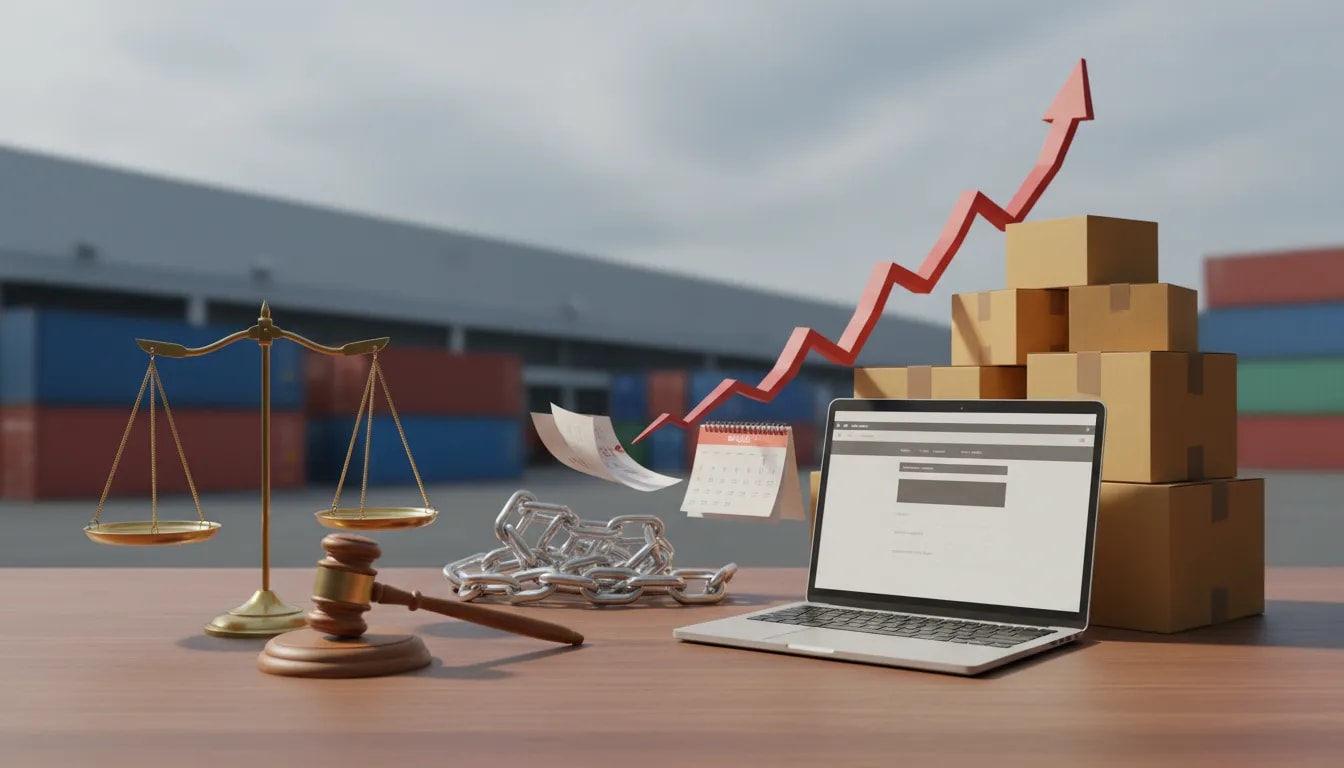
A recent court ruling changed the legal basis for some import tariffs, but it did not remove the tariff pressure many online stores face. The headlines suggested a big win for sellers. The real change is smaller and temporary. What matters now is a different set of tariffs and new investigations that could raise costs for months or years.
This guide explains what changed, why most sellers will still pay higher import costs, and the exact steps you should take this week, this quarter, and this year to protect margins and supply chains.
Table of Contents
- Quick overview for busy sellers
- Key terms explained in plain English
- What actually happened and why headlines mislead
- Concrete math example sellers can use
- Why Section 301 is the long term risk
- Refunds and lawsuits explained
- Who is most exposed
- Immediate actions to protect margins Right Now
- 30 day plan: pricing, inventory and supplier outreach
- 90 day plan: sourcing, contracts and freight strategy
- Pricing and margin tactics that work
- Sourcing strategies to reduce tariff risk
- Tariff engineering and HS codes
- How to calculate the true landed cost
- Why refunds will not help most sellers
- Common mistakes and pitfalls
- Decision framework for whether to move a SKU
- How long might this whole process take
- Example timeline and recommended milestones
- Actionable checklist to follow now
- When to consider more advanced moves
- How to monitor developments going forward
- What to tell your team and customers
- Pitfall watch list
- FAQ
- Summary and final priorities
Quick overview for busy sellers
- What changed The legal basis for certain emergency tariffs was struck down.
- What stayed Pre existing tariffs put in place through formal Section 301 investigations remain in force.
- What replaced the struck down tariffs A temporary, flat 15 percent tariff now applies while new investigations are underway.
- What to do first Run a 20 minute check on your top five SKUs to see if they fall under active Section 301 investigations.
Key terms explained in plain English
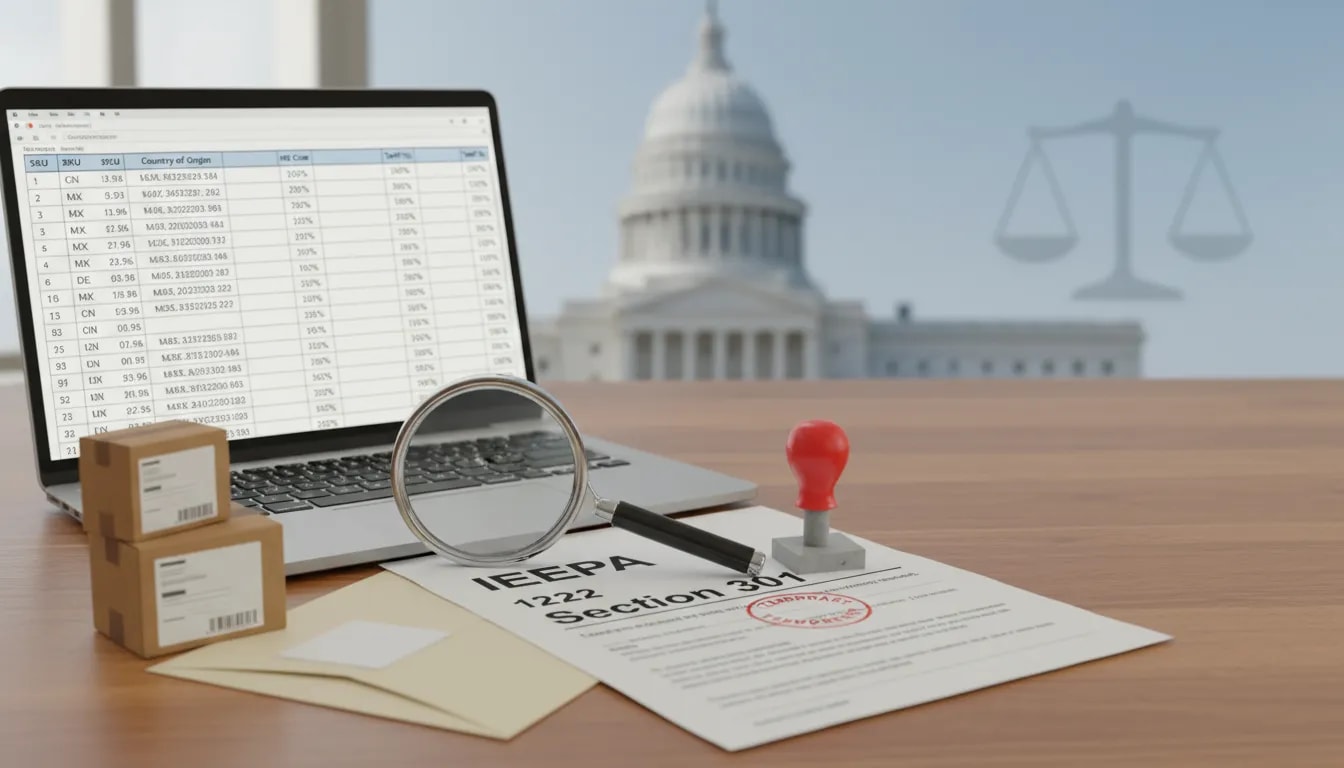
IEEPA tariffs
IEEPA stands for International Emergency Economic Powers Act. It lets the government impose trade measures quickly when it says there is an emergency. Tariffs imposed under IEEPA can be broad but they are legally vulnerable if a court finds the emergency claim was improper.
Section 122 tariff
Section 122 is a temporary tariff applied to imports while the government begins formal investigations. It is typically a flat rate set to hold revenues steady during the investigation. It is not meant to be permanent.
Section 301 tariffs
Section 301 allows the United States Trade Representative to investigate unfair trade practices and impose tariffs based on documented findings. Tariffs set after a Section 301 finding are more legally durable. Many of the higher, lasting tariffs sellers have paid for years were created under Section 301.
Section 301 investigations
These are formal reviews that take months to complete. They gather evidence, issue findings, and recommend remedies such as targeted tariffs. Once a Section 301 finding is final, it becomes hard to overturn in court.
What actually happened and why headlines mislead?
A court ruled that the emergency legal basis for several tariffs was invalid. That removed certain emergency tariffs overnight. At the same time the government put a temporary flat tariff in place and announced new formal investigations that could end in permanent tariffs. Headlines that said tariffs are gone are incomplete. A temporary tariff replaced the old emergency tariff and long term legal work began.
Concrete math example sellers can use
Use this example to see how small the immediate change is and why margin exposure remains large.
- Product landed cost before any tariff: $20
- Existing Section 301 tariff on that product category: 25%
- Emergency IEEPA tariff in place before the ruling: 20%
Total tariff burden before the ruling equals 45 percent. That $20 product cost the seller $29 after tariffs.
After the ruling the emergency tariff was replaced with a flat 15 percent tariff. Total tariff burden now equals 40 percent. That same $20 product costs $28 after tariffs.
That is a one dollar reduction on a twenty dollar product. It matters, but it does not change whether the product is profitable if margins were thin. For many sellers the risk that a future Section 301 outcome could raise tariffs again is the real problem.
Why Section 301 is the long term risk
Section 301 tariffs are based on documented investigations into trade practices. Those findings make tariffs stickier in court. Historically the tariffs imposed on goods from certain countries under Section 301 survived legal challenges and multiple administrations.
If the new investigations conclude that unfair practices exist and recommend tariffs, those new tariffs can be broader and last for years. The temporary tariff in place today is a bridge. The investigation is the thing that can lock in elevated rates.
Refunds and lawsuits explained
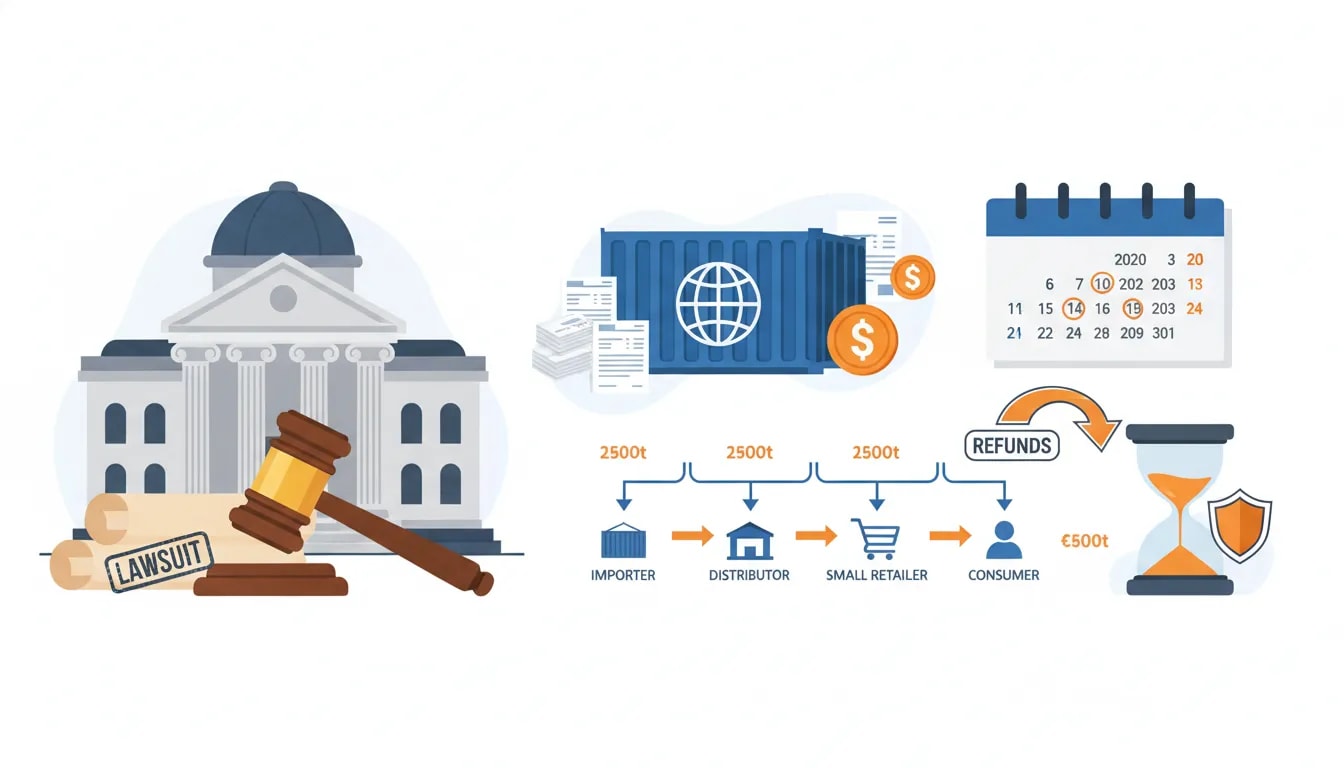
Some companies have filed lawsuits seeking refunds for tariffs that were applied under the now struck down emergency authority. The courts did not directly order refunds. Each lawsuit must proceed on its own. That process will take years not months.
Also understand how money flows. Large importers often passed tariff costs down the supply chain through higher prices. If refunds ever arrive they will go to the companies that sued, not to downstream sellers or consumers.
Who is most exposed
Exposure depends on sourcing and product category. Two simple facts guide exposure risk right now.
- Products sourced from China remain the most exposed because many high Section 301 tariffs target Chinese imports and those tariffs remain in force.
- Products sourced from other countries have less long term exposure for now because many of their elevated rates originated under emergency authority and were removed or replaced by the temporary flat rate.
If you have not diversified supply away from China, your tariff risk is higher and persistent.
Immediate actions to protect margins Right Now
The single fastest task you can do is the 20 minute SKU exposure check. It takes little time and gives immediate clarity.
20 minute SKU exposure check
- Open your list of SKUs and identify the top five by volume or profit.
- For each SKU find the Harmonized System code or the HS classification used on your shipment documentation.
- Check the USTR website and recent Section 301 notices to see if that HS code or product category appears in an active investigation.
- Record the current tariff rate for that HS code and the country of origin.
- If any SKU is listed in an active investigation start sourcing conversations right away and make a plan to diversify supply.
That task gives you immediate visibility of how exposed you are and which products to prioritize.
30 day plan: pricing, inventory and supplier outreach
Once you know which SKUs are at risk, follow this 30 day plan to reduce surprise and buy time.
- Recalculate landed cost including the temporary 15 percent tariff, existing Section 301 tariffs, duties, broker fees, and expected shipping costs. Use conservative freight estimates.
- Decide on pricing moves for exposed SKUs. Test small price increases where your margin is smallest. Communicate changes clearly in listings.
- Contact current suppliers to ask about alternative factories in other countries and lead times for shifting production.
- Request quotes from at least two alternative suppliers in India, Vietnam or other low tariff countries for each high risk SKU.
- Order samples and verify quality early. Do not wait until a Section 301 finding is final.
- Adjust inventory to reduce exposure to SKUs that will be hard to replace quickly while keeping enough stock to avoid stockouts.
90 day plan: sourcing, contracts and freight strategy
Over the next three months you should start converting conversations into firm alternatives and put processes in place for faster shifts if needed.
- Lock in alternative suppliers with small pilot orders. Negotiate price, quality checks, and lead times before you scale.
- Implement multi sourcing where possible. Split orders across suppliers and countries to reduce single point failure.
- Start freight diversification by comparing rates for different routes and carriers. Consider air for critical SKUs and sea for cost sensitive items.
- Use interim contracts that allow you to expand orders if a Section 301 finding makes costs rise suddenly.
- Update inventory forecasting to reflect longer lead times from new suppliers and potential tariff scenarios.

Pricing and margin tactics that work
When tariffs change the easiest lever is price. Use these tactics to protect margins without scaring customers.
- Tiered price increases Raise price in small steps and monitor conversion.
- Product bundles Combine SKUs to increase average order value and hide small increases.
- Shipping structure Increase free shipping thresholds rather than blanket raising shipping costs.
- Value messaging Emphasize product benefits to reduce price sensitivity.
- Absorb selectively Keep promotional pricing for your best sellers but raise price on thin margin SKUs.
Sourcing strategies to reduce tariff risk
Sourcing is the lever that changes exposure for good. The goal is not always to leave one country completely but to reduce concentrated risk.
Move production to other low tariff countries
India and Vietnam currently have lower durable tariff exposure in many categories. They often offer competitive labor cost and growing manufacturing capacity. Start pilot runs and verify quality before scaling.
Use near shore options
Mexico and other near shore countries can reduce lead times and freight cost. They are not immune to future trade measures but can provide shorter logistics and faster response.
Multi country sourcing
Split your orders across suppliers in multiple countries. This spreads risk and keeps factories competitive on price.
Supplier audits and transferability
When you qualify a new factory, require documentation and process checklists that allow you to move production to a second site quickly. Make quality standards explicit in purchase orders.
Tariff engineering and HS codes
Small product design or classification changes can move a SKU into a lower tariff bracket. This is called tariff engineering. Use this approach where it is legal and viable.
- Review HS classification with a customs broker. Misclassification can mean paying the wrong rate.
- Consider minor product changes that change the product description while keeping customer value. Test customer response before committing.
- Document changes thoroughly to support your classification at customs.

How to calculate the true landed cost
Tariff changes reveal how few sellers calculate landed cost correctly. Use this formula to get a reliable number.
Landed cost equals product cost at origin plus shipping and insurance plus customs duties and tariffs plus customs broker fees and handling plus import VAT or local taxes.
- Start with factory price or FOB price.
- Add international freight and insurance to get cost insured freight or CIF.
- Apply the relevant tariff percentage to CIF value.
- Add customs broker and port handling fees.
- Add domestic freight to your warehouse and any import VAT or sales tax you must pay.
Use conservative scenarios to stress test your pricing and margin. Build three cases: best, likely, and worst.
Why refunds will not help most sellers
Large refund claims from major corporations are underway in many cases. But refunds will follow long court battles and will go to the companies that filed suits. Small and medium sellers should not assume refunds will ever reach them directly or soon.
Plan operations and margins without assuming a refund. Treat any refund as a bonus that may arrive years from now.

Common mistakes and pitfalls
- Relying on headlines Headlines simplify complex legal changes. Verify the current tariff and the legal status for your HS code and country of origin.
- Waiting to start sourcing Starting after a Section 301 finding leaves you competing for limited capacity and higher prices.
- Moving all orders at once Switching suppliers overnight risks quality issues and stockouts. Phase changes with pilot orders.
- Ignoring HS codes Many sellers do not know their HS codes. That is the fastest way to misjudge tariff exposure.
- Counting on refunds Do not build your cash planning around potential refunds.
Decision framework for whether to move a SKU
Use this four step framework to decide whether to shift production or keep suppliers.
- Assess exposure Is the SKU in an active Section 301 investigation or at high Section 301 tariff already?
- Estimate impact How much will the tariff change affect landed cost and margin at current price points?
- Explore alternatives Can another supplier or country match quality and lead time within acceptable cost?
- Act with staging Pilot the alternative with a small order while keeping a safety stock from your current supplier.
How long might this whole process take
Expect months for Section 301 investigations to conclude and potentially years for related litigation to finish. Temporary tariffs may be in place for the duration. Legal uncertainty can last a year or more, and supply chain adjustments should plan for that horizon.
Example timeline and recommended milestones
- Week one Run the 20 minute SKU check and recalc landed costs.
- Month one Get quotes from alternative suppliers and update pricing tests.
- Month three Place pilot orders with one or two alternatives and begin freight tests.
- Month six Scale alternative suppliers for top risk SKUs and update contracts to enable future expansion.
- 12 months Have multi sourcing in place for your top risk SKUs and running forecasting that includes tariff scenarios.
Actionable checklist to follow now
- Run the 20 minute SKU exposure check on top five SKUs.
- Recalculate landed cost including all current tariffs.
- Contact customs broker to confirm HS codes and duties.
- Request alternative supplier quotes for exposed SKUs.
- Order samples from at least two new factories before you need them.
- Test small price increases where margins are weakest.
- Document quality standards and onboarding steps for each new supplier.
- Create a staged switching plan to avoid sudden stockouts.
When to consider more advanced moves
Consider these options if your business has scale or if your category faces high durable tariffs.
- Contract manufacturing Secure capacity through longer term contracts with suppliers outside targeted countries.
- Bonded or free trade zones Explore storage or processing in bonded warehouses to time duty payments and reduce working capital strain.
- Domestic manufacturing For some categories it can make sense to reshore at partial scale to guarantee supply.
- Product redesign Invest in design changes that reduce tariff exposure or move the product into a lower rate classification.
How to monitor developments going forward
- Subscribe to USTR notices for new Section 301 actions.
- Work with a customs broker to receive alerts for HS code changes or rulings.
- Follow trade press and official published tariffs rather than mainstream headlines.
- Set a monthly review for tariff exposure in your inventory planning process.
What to tell your team and customers
Communicate clearly and calmly. Internal teams need to know which SKUs to prioritize for sourcing and which for price tests. Customers appreciate transparency when stock or prices change.
- Internal memo Share the SKU exposure results and the staged plan for supplier changes.
- Customer messaging If prices or shipping times change, explain the reason briefly and offer alternatives or promotions.
- Supplier communication Ask open questions about capacity and options, and negotiate flexible terms for scaling up if needed.
Pitfall watch list
- Avoid moving every product at once. Quality failures and stockouts damage the brand.
- Do not assume every non China source is automatically cheaper after tariffs. Freight and handling can offset gains.
- Watch HS code boundaries. Small differences in component composition change tariffs.
- Do not rely on refunds. Build plans that work without any expected reimbursement.
FAQ
Will all tariffs disappear because of the court decision
No. The court decision removed tariffs tied to a specific emergency legal authority. Some of those rates were replaced temporarily and investigations are underway. Tariffs created through formal Section 301 findings remain in force and are the bigger long term risk for many sellers.
How can I check if my SKU is in an active Section 301 investigation
Identify the HS code for each SKU. Visit the United States Trade Representative website and search recent Section 301 notices. You can also ask your customs broker to confirm whether a specific HS code is part of an active investigation.
Will refunds for illegal tariffs come back to my small business
Refunds, if awarded, will go to the companies that filed lawsuits. Each claim must be litigated. The process could take years and is unlikely to deliver direct refunds to small sellers who did not file claims.
Should I immediately stop sourcing from China
Not necessarily. A sudden full exit from China can cause quality, lead time, and cost issues. Prioritize diversification. Start pilot production in alternatives and build multi sourcing before reducing China volume.
How long do Section 301 investigations take
Investigations can take several months to more than a year to complete. After findings are posted there can be additional notice and comment periods, implementation phases, and legal challenges that extend the timeline.
What is the fastest way to reduce tariff exposure
The fastest steps are to check your HS codes, recalc landed cost for affected SKUs, and start sourcing conversations with suppliers in alternate countries. Even small pilot orders reduce your risk if tariffs change suddenly.
Can I change product classification to avoid a tariff
Possibly. Reclassification must be accurate and defensible. Work with a customs broker and test any change before shipping large volumes. Misclassification can lead to fines and back duties.
Summary and final priorities
The court ruling changed the legal basis for some tariffs but did not end tariff risk for e commerce sellers. A temporary flat tariff replaced the emergency rates and formal Section 301 investigations are now the issue that could create long lasting tariffs.
Your priorities this week are simple and practical. Run the 20 minute SKU check. Recalculate landed costs. Begin sourcing conversations. If you do nothing else, start diversifying early rather than waiting for final findings. The sellers who delay will face tighter factory capacity and worse pricing when many others react at once.
Use the checklists in this guide as a roadmap. Tariff developments will keep moving. With clear steps and staged actions you can protect margins and keep your business competitive no matter what the official rulings bring.
