
Table of Contents
- Introduction
- What Munger Sees Wrong with Today
- The Ethics of Selling Risk
- The Horse Story and Private Equity
- Where the Tricks Hide
- How to Spot a Fake Guru
- Why Honesty Pays
- Practical Rules for Investors and Consumers
- What Professionals Should Do
- Why Projections Mislead
- How to Build a Guardrail in Your Life
- Common Tricks to Watch For
- How to Talk Back to a Pitch
- What Munger Means by the High Road
- Why Many Ignore This Advice
- How to Teach Young People Better
- How This Applies Beyond Finance
- Examples Where Honesty Beats Hype
- How Regulators Fit In
- What to Do If You Were Burned
- Key Takeaways
- Final Thoughts
- FAQ
Introduction
Charlie Munger spoke plainly. He cut through the noise of modern commerce and named a truth most people avoid. The market now attracts gurus who sell shortcuts, loud voices who promise fast gains, and firms that profit from smoke and mirrors. Munger did not hold back. He called out the push to get everyday people to trade actively. He warned about the pitchmen who sell impossible returns. And he urged a simple life rule: choose people and firms that act with decency.
What Munger Sees Wrong with Today
Munger looked at how the market talks to ordinary people. He saw two related problems. First, a flood of advice pushes active trading as if it were the only path to wealth. Second, sellers of advice and products cloak poor offers in slick language. They use ads and hype to mask risk and to hide the math. To Munger, both moves prey on wishful thinking.
He gave a blunt picture of those who peddle miracle results. Some on TV claim an easy way to make 300 percent a year. Munger asked the simple question: how likely is it that someone who truly found a sure path to enormous returns would mail a book to strangers for shipping charges?? The answer is obvious. If you had the secret, you would not try to sell it that way. You would not need to sell it at all.
Munger pointed to advertising lingo as a core tool for these sellers. Ads pick a tiny number that looks big in a pitch. They ignore scale, context, and math. They press one point until you forget the full picture. That is not an accident. It is the design of modern marketing.
The Ethics of Selling Risk
At the heart of Munger’s talk lay a moral claim. He argued that selling bad outcomes as good ones hurts people. It wastes time, money, and trust. Worse, it trains consumers to expect quick fixes. That fuels a cycle. New sellers then push harder, and more people follow their lead. Over time, the whole market feels like a carnival full of tricks.
Munger used sharp images to make the point. He said pushing young people into active trading is close to encouraging them to use heroin. He did not mean that literally. He meant the impulse to trade for thrill and to chase short-term wins can destroy wealth and life plans. When gambling wears the face of expertise, it becomes dangerous.
The Horse Story and Private Equity
One part of the talk moves beyond ads and into deal-making. Munger told a story about a man with a horse. The horse was great when it behaved. But sometimes it turned violent and broke bones. The vet supposedly advised the owner to sell the horse while it was calm. The moral: pass the problem to someone else when things look good. Handle your risk by offloading it at the right moment.
Munger used the story as an analogy for a certain kind of finance. He tied it to private equity and the role of investment bankers. When a firm runs a risky or troubled asset, investment bankers will make projections that paint a sunny future. Munger said he had never seen more skill in making up rosy forecasts. The point is not that bankers cannot see the future. The point is, they have incentives to sell. They will build scenarios to make an ugly business look like gold.
That kind of projection works in a market where buyers trust the numbers and the pitch. That trust matters. When it breaks, the buyer pays. Munger and his partner Warren Buffett followed a different path. They aimed to buy businesses they thought had value and to be honest in how they presented them. If they had poor assets, they did not fake a cure.
Where the Tricks Hide
Munger named specific places to watch for chicanery. He called out three familiar sources.
- Advertising and marketing — Ads can slice the truth into small, catchy claims. They hide scale and risk.
- Sales pitches from supposed experts — Books, courses, or TV spots that promise outsized returns often target greed and fear.
- Deal-making and projections — Investment bankers and advisors can spin tales about the future of a company to get a sale done.
In each case, the seller holds information the buyer lacks. That creates power. Munger urged buyers to close the gap. Learn the math. Ask hard questions. And avoid a deal when the answers mix emotion and convenience more than facts.
How to Spot a Fake Guru
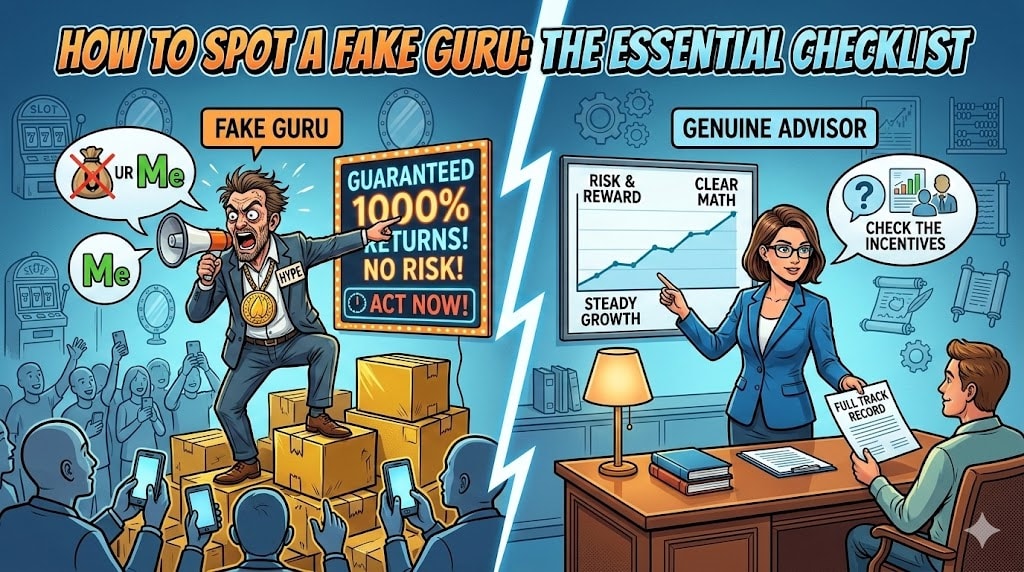
Identifying a fake guru takes work. It asks you to look for patterns more than one time traps. Munger offered clues through his tone and stories. From these we can build a checklist you can use today.
- Check the incentives. Who gains if you buy their product? If the seller earns by getting more buyers, not by better outcomes for clients, think twice.
- Look for unrealistic promises. Claims of guaranteed large returns with low risk are a red flag. Markets do not reward certainty at extreme levels.
- Ask for simple math. Any claim that cannot be shown in plain numbers or consistent past results deserves skepticism.
- Examine the track record carefully. Public claims should match past outcomes. If the numbers do not add up, do not accept the story.
- Watch sales tactics. Pressure to act now, fear of missing out, or offers that require secrecy all block good decision making.
- Seek independent views. Get a second opinion from someone with no stake in your choice.
Few things in finance stand on one leg. Good offers show honest risks, clear math, and steady records. Fake gurus lean on emotion and secrecy.
Why Honesty Pays
Munger did not just criticize. He offered a case for honesty as both a moral choice and a business strategy. He told a personal anecdote from his father. The elder Munger had two clients. One was a loud blowhard who always needed help. The other, Grant McVeigh, treated people fairly and kept out of trouble. His father chose to work for the man who caused fewer legal fights. He explained why: a steady, fair client needs less rescue. You earn better returns over time by serving good people well.
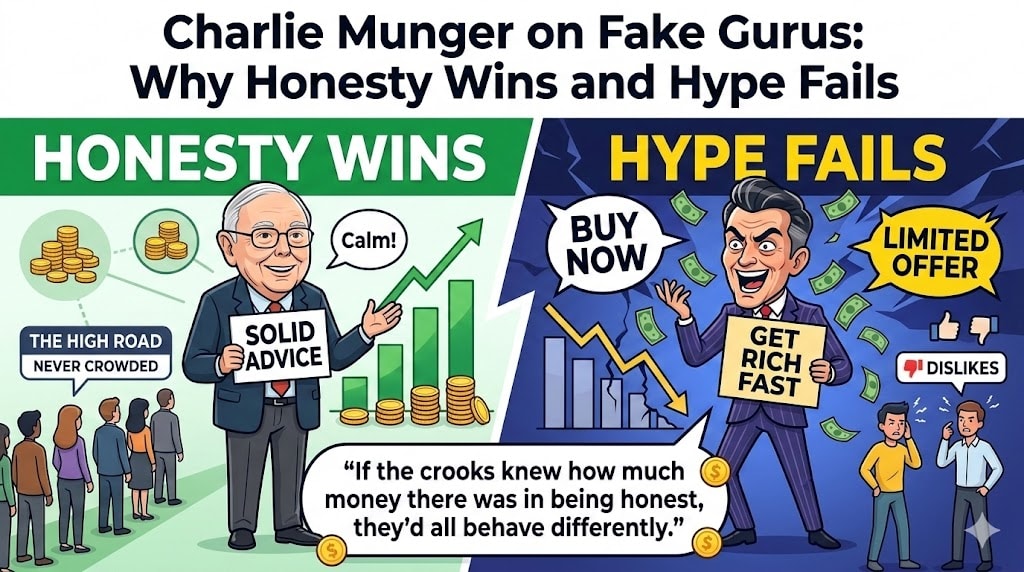
That story captures a wider rule. When you deal with honest partners, you cut friction. You avoid costly fights and waste. Over time the gains build. Peter Hoffman, a friend Munger cited, argued that crooks could earn more by being honest. If they knew how much easier honest work can be, they might change.
Warren Buffett put the idea this way in a line Munger loved. Buffett said, “If you take the high road, it’s never crowded.” The saying points to a simple fact. Many people choose the low road because it offers quick wins or fewer scruples. But the high road — honesty, clear math, and fair treatment — faces less competition. It creates durable advantage.
“If you take the high road, it’s never crowded.”
Practical Rules for Investors and Consumers
Munger offered clear actions. They are small steps you can take today to avoid scams and to build a stronger financial life. They rely on three themes: reduce noise, reduce churn, and choose quality.
- Reduce noise. Turn off the flashy ads. Ignore hot tips that come with urgency. Learn the basics of investing so you can test any claim against simple math.
- Reduce churn. Trading often increases cost and chance. Most individual investors do better by staying the course in sound businesses or index funds than by chasing short term plays.
- Choose quality. Look for firms and advisors with clear, public records. Pick partners who have dealt fairly with people for years.
These habits do not promise instant riches. They do lower risk. They help you keep more of what you earn. They favor long term success over quick thrills.
What Professionals Should Do
Munger also called on people who sell financial products to act with care. He urged them to avoid leading customers into bad bets. He called out advisors who profit by getting clients to trade more. A good professional aligns incentives with client outcomes. That reduces the need to sell tricks and keeps trust intact.
For firms, the lesson is simple. Build offerings that work for clients, not just for sales teams. Resist the urge to dress up poor deals with clever words. In the long run, trust wins. You gain repeat business and fewer legal fights. You also sleep easier.
Why Projections Mislead
Munger singled out crafted projections as a tool of deception. He pointed out how investment bankers make businesses look better on paper. They model best case scenarios as if they were likely. They ignore the tail risks that matter. That practice misleads buyers about likely outcomes.
To fight that, demand realistic scenarios. Ask for a range of outcomes, not a single silver bullet. Insist on clear assumptions. If the person selling the deal cannot explain the math in plain terms, walk away. Projections should hold up to scrutiny from a skeptical third party.
How to Build a Guardrail in Your Life
Munger knew that the world would always have crooks and charlatans. He offered a practical guardrail: choose the company you keep. Work for and buy from people who behave well. If you surround yourself with honest people, you will face fewer traps.
That approach applies to more than money. It touches work, friendships, and civic life. When people treat others with respect, they create less friction. You avoid legal fights, wasted time, and stress. The payoff comes in quieter days and better returns.
Common Tricks to Watch For
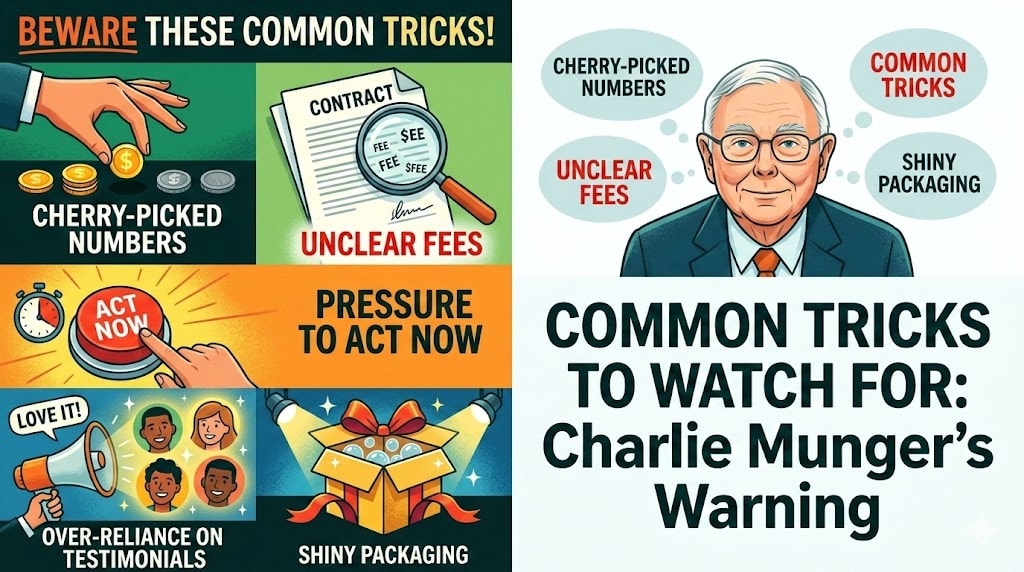
Munger described a few specific tricks that show up again and again. Knowing them helps you move fast when you spot them.
- Cherry-picked numbers. Sellers will show a tiny set of wins and hide the long list of losses.
- Unclear fees. Hidden costs eat returns. Ask for full fee lists and past client results after fees.
- Pressure to act now. Urgency often masks a lack of merit. Good offers stand up to delay.
- Over-reliance on testimonials. Stories sell, but they do not prove effectiveness.
- Shiny packaging. Fancy reports or slick slides do not replace math or evidence.
How to Talk Back to a Pitch
You do not have to be rude. You can cut through hype with a few firm questions. Try these when you face a pitch.
- How do you make money if this fails? Who pays your fees if the outcome is poor?
- Show me the full fee structure and the net returns to the investor over the last ten years.
- If you expect this business to double in five years, show me the drivers and the risks that could stop that growth.
- Who has audited these claims and can confirm them independently?
Good sellers will welcome this. Bad sellers will get defensive or vague. That tells you what you need to know.
In practice, this looks like longer contracts with lower churn, public reports that match reality, and sales that focus on fit rather than quick wins. Firms that do this win in the long run.”
<img style="max-" src="https://onexoluxioncom2692f.zapwp.com/wp-content/uploads/2026/04/what-munger-means-by-the-high-road-when-munger-talks-about-the-high-road-he-poin-vtb-69e6883ec0306.webp?src=jpg" alt="What Munger Means by the High Road When Munger talks about the high road, he points to clear steps. Be honest in how you report results. Price fairly. Avoid preying on fear or greed. Make sure clients know the real odds. Keep legal returns and incentives aligned with client success.
What Munger Means by the High Road
When Munger talks about the high road, he points to clear steps. Be honest in how you report results. Price fairly. Avoid preying on fear or greed. Make sure clients know the real odds. Keep legal returns and incentives aligned with client success.
In practice, this looks like longer contracts with lower churn, public reports that match reality, and sales that focus on fit rather than quick wins. Firms that do this win in the long run.
Why Many Ignore This Advice
Many people chase short term gain. Sales teams get bonuses for volume. Media rewards big claims because they draw attention. Regulators move slowly. So the system often favors the loud over the honest. That does not mean the honest path lacks value. It means you must choose it with care and keep the long view.
How to Teach Young People Better
Munger worried about youth who see trading as a quick road to wealth. Teaching should focus on principle not the thrill. Help young people learn:
- How compounding works
- What risk and diversification mean
- How fees and taxes reduce returns
- How to read financial statements in plain terms
When they know the math, they resist flashy claims. They also make choices that pay off for decades.
How This Applies Beyond Finance
The speech goes beyond money. It is a case for good taste in life. When you pick partners, clients, or leaders, favor the steady and fair. Avoid those who bring drama and legal fights. Hire people who treat others well. Buy from firms that act with care. Over time, life will cost less and reward more.
Examples Where Honesty Beats Hype
You can find real-world proof. Look at companies that treat customers well and reinvest profits for the long term. They often outlast trend chasers. Look at advisors who put client interests first. They build referrals and steady growth. These firms do not always shine on a news cycle, but they win where it matters: in results over years and decades.
How Regulators Fit In
Munger did not blame regulation for every problem. He pointed to human nature. But rules do matter. Better disclosure and stronger gatekeepers can cut the worst scams. Still, regulation alone cannot fix the core issue. People must learn to ask the right questions and to read the math. Market literacy matters as much as rules.
What to Do If You Were Burned
If you lost money to hype, take a step back. Do not double down on emotion. Follow a plan:
- Document what happened and gather records.
- Seek independent advice from a fee only advisor with no conflict.
- Decide on a repair path based on clear math and small steps.
- Learn what signs you missed and build checklists to avoid repeat mistakes.
Most losses come with lessons that can save far more later.

Key Takeaways
- Hype sells but often hides risk.
- Projection and spin can make bad things look good on paper.
- Ask for plain math and independent proof.
- Choose people and firms who behave well and keep your incentives aligned with theirs.
- Teach young people the basics so they resist quick-fix claims.
- In the long run, honesty builds more value than clever tricks.
Final Thoughts
Charlie Munger spoke with a mix of bluntness and care. He wanted people to see what the market looks like up close. He wanted sellers to know that honesty pays. The world will keep having people who sell easy answers. But smart choices, plain math, and steady partners will save you time and money. Those rules apply to your funds, your friends, and your work life. They bring calm and better results.
If you take one idea from this talk, let it be this: think twice before you trust a promise that sounds too easy. Ask simple clear questions. Choose the high road. It may be quiet, but it leads to lasting gains.
FAQ
What does Charlie Munger mean by fake gurus?
He refers to people who sell easy ways to get rich, such as books or courses that promise large returns with little risk. They use slick marketing and cherry-picked claims to gain buyers.
How can I tell if an investment pitch is honest?
Ask for the full math, check historical results after fees, seek independent audits, look for clear fee lists, and watch how the seller handles hard questions. Honest pitches will stand up to scrutiny.
Why does Munger dislike active trading for most people?
He believes active trading raises cost, invites mistakes, and feeds on emotion. Most individual traders pay fees and taxes that erode returns. A long-term plan in solid businesses or broad funds often works better.
What is the high road in business?
The high road means honest reporting of results, fair fees, clear incentives, and a focus on client outcomes. It avoids tricks and short-term gains in favor of steady value over time.
How do I protect young people from trading hype?
Teach them basic finance, the power of compounding, the harm of high fees, and how to test claims. Help them build habits that favor long-term saving over short-term thrill.
