
This article breaks down a video from the MyWifeQuitHerJob Ecommerce Channel that exposes the strategy behind Amazon Basics and other Amazon-owned labels. The video lays out how Amazon uses low-margin or even loss-making products not just to sell items, but to steer shoppers, squeeze sellers, and lock people into its ecosystem. It also shows real-life harm from product failures and raises questions about fairness and safety on the platform.
Below you will find a clear summary of the video’s main points, real examples from sellers and shoppers, a look at the economics behind Amazon’s decisions, the safety issues that surfaced in reporting, and practical steps buyers and sellers can take today to protect themselves. I also include a short FAQ that answers the most common follow-up questions.
Quick overview: What the video revealed
- Amazon Basics is everywhere: The brand appears at the top of many search results across product categories.
- Thin margins, deep impact: Many Amazon Basics items have razor-thin profits or lose money. They still appear first because Amazon gains in other ways.
- Search and badge power: Amazon controls search placement and uses badges, which steer shoppers toward its products.
- Seller harm: Independent sellers report sudden sales drops after Amazon launches near-identical products. In some cases, Amazon’s product appears inside a seller’s own listing.
- Safety concerns: Reports and official recalls have revealed dangerous failures in some Amazon-branded products.
- The real business model: Amazon earns far more from advertising than from retail margin. Its private labels force sellers to buy ads to compete, boosting Amazon ad revenue.
What most people get wrong about Amazon Basics
When shoppers see the Amazon Basics tag they usually think: “This is Amazon’s cheap option, so it should be a safe bet.” Sellers think the tag means normal competition. Both ideas miss the full picture.
The video argues that Amazon Basics does not exist primarily to make money selling socks, cables, or batteries. Instead, the brand helps Amazon control search results and buyer behavior. Amazon can sacrifice profit on one product to gain much more from the shopper and from other sellers.
Key facts as explained in the video:
- Amazon Basics has hundreds of thousands of products listed across categories.
- These products often rank at or near the top of searches for common terms like “USB cable,” “batteries,” or “office chair.”
- Amazon’s product placement is not always linked to best reviews, best price, or best specs. It is linked to what Amazon wants customers to see.
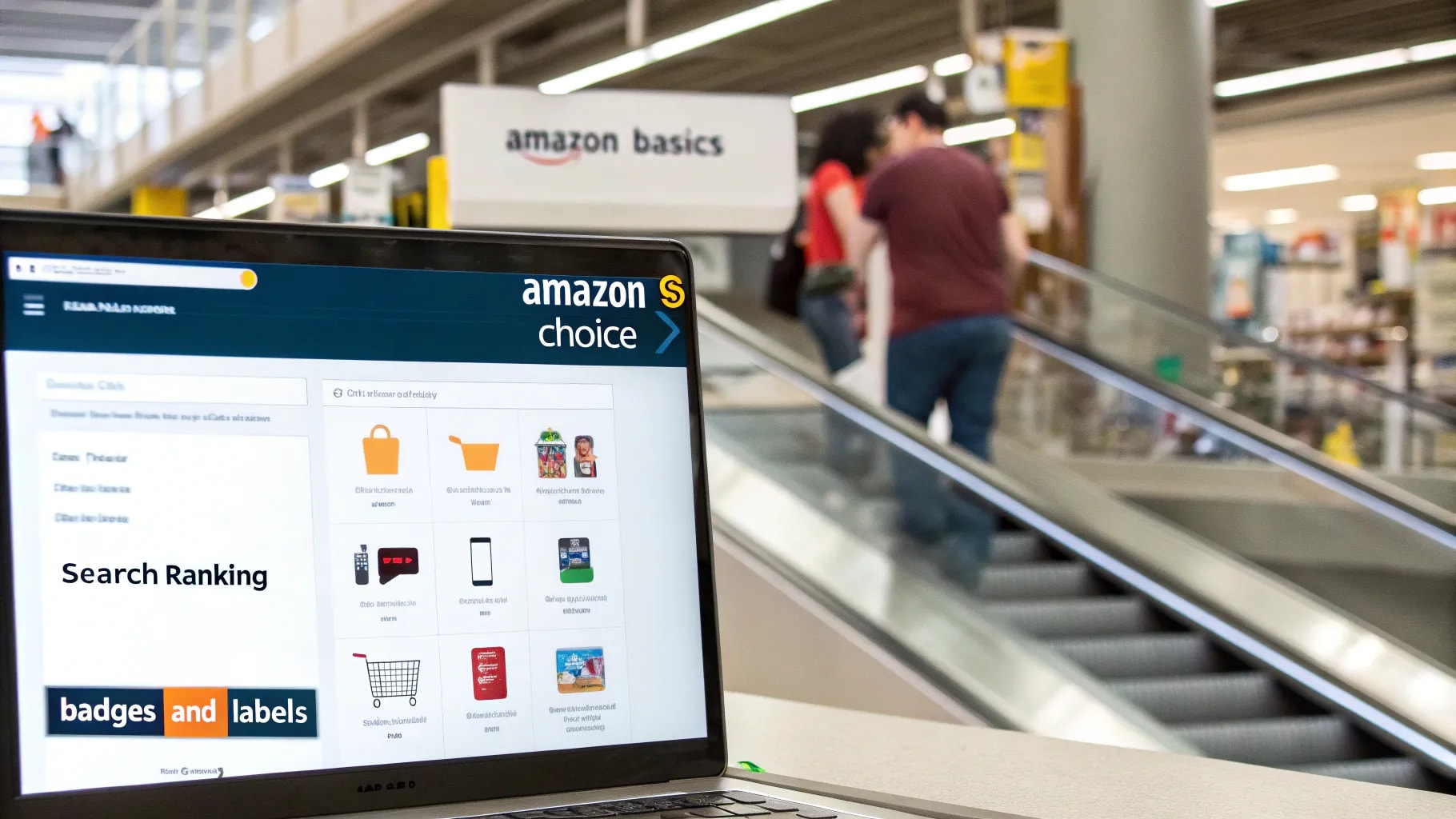
How Amazon steers shoppers: search, badges, and placement
The search box is where most shopping starts. The video shows how simple searches for everyday items yield Amazon Basics listings at the top. These listings are not always the best option for the buyer.
Two main levers Amazon uses:
- Search ranking: Amazon can place its own products ahead of third-party sellers, regardless of ratings or price.
- Badges and labels: Items marked “Amazon’s Choice” or similar receive higher trust and click-through rates from shoppers. Amazon sets the criteria for those badges and can award them to its own products.
Psychologically, a badge or top placement reduces the effort a shopper expends. Many shoppers skip scrolling and buy the first decent option. That behavior drastically favors Amazon’s own labels.
Examples from the video
- Search for “USB cable”: Amazon Basics appears first even when it is neither the cheapest nor the highest rated.
- Search for “toilet paper,” “batteries,” and “office chairs”: Amazon Basics again shows up at or near the top.
- The narrator’s test: a microSD card with better speed and equal price ranked below the Amazon Basics product.
These tests show a pattern: Amazon surfaces its own product first. The badge seals the deal for many buyers.
Real people, real damage: resale and brand copy examples
The video shares stories to illustrate the human and business cost when Amazon competes directly with independent sellers.
Carol’s emu oil business
Carol built a seven-figure business selling emu oil supplements on Amazon FBA. She created a real brand, invested in reviews, and grew sales over time.
Then Amazon launched its own emu oil. It priced the product about 30% lower than Carol’s product. Within 90 days, her sales dropped by roughly half. Her product did not lose quality or reviews. She did not get outcompeted on value. She was buried.
What made the situation worse: Amazon placed its own product inside Carol’s listing. That move put Amazon’s buy button directly on the page where Carol had built her reputation. In effect, her hard work became the stage for Amazon’s product to sell.
The result: a sudden revenue collapse for Carol and other sellers in similar positions.
Peak Design and the copycat sling bag
Peak Design sells a premium sling bag with a higher price point and a strong brand. The video explains that Amazon produced a near-identical item. They copied the name, the look, and the listing layout. Amazon’s version used lower-cost materials and removed the lifetime warranty. It sold for about half the price.
Peak Design made a video to call attention to the copy. Amazon quietly changed the name and kept selling. The brand was forced to publicly defend itself to keep customers informed.
What these examples show
- Amazon can and will create similar products that undercut independent sellers.
- Amazon can insert its product into existing listings and listings’ buying options.
- Even blatant copying can leave the original seller with little immediate remedy.
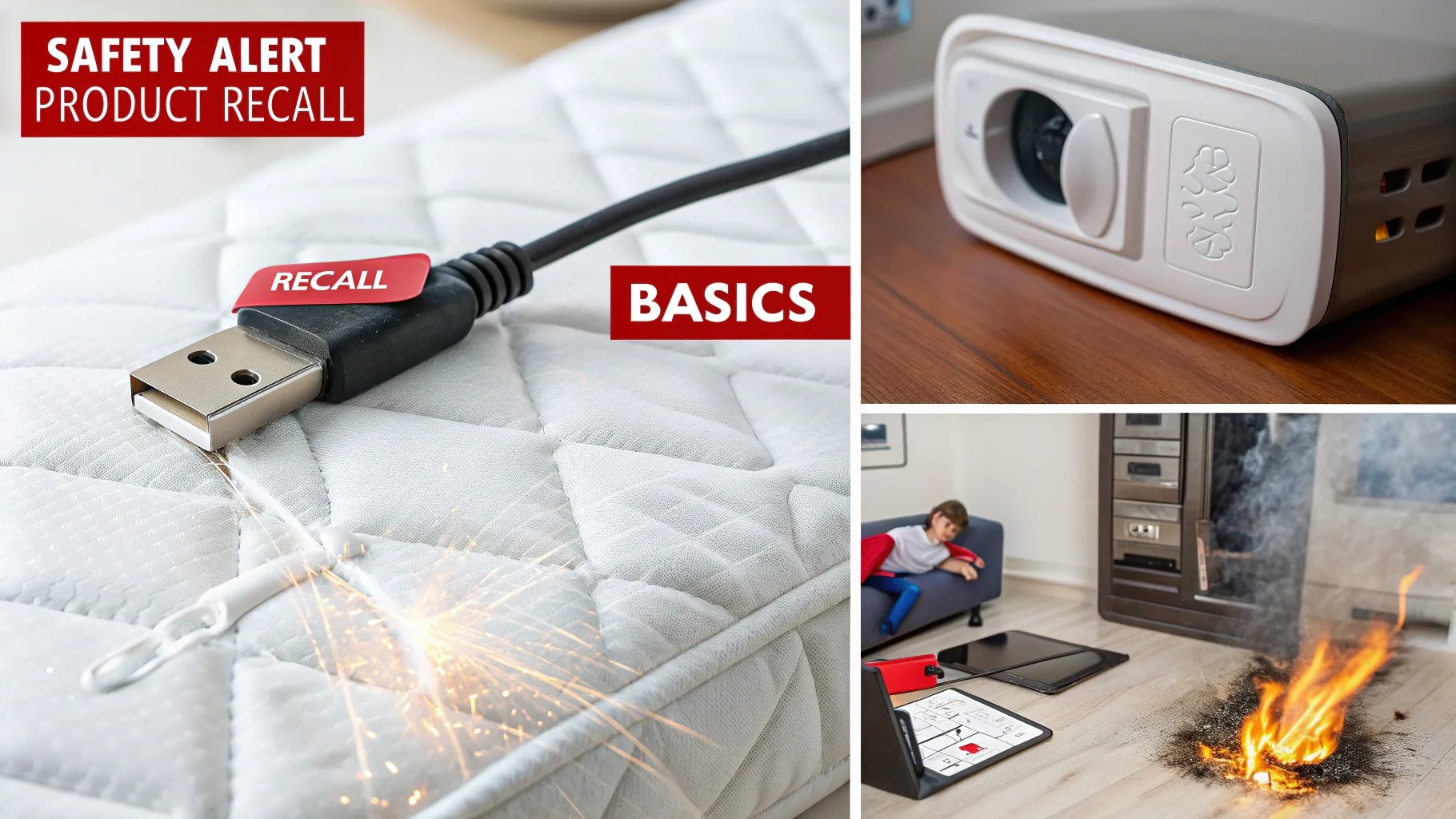
When safety fails: product recalls and reports of fires and malfunctions.
Beyond business harm, the video highlights safety issues tied to some Amazon-branded products.
Key safety concerns covered:
- In 2021 the Consumer Product Safety Commission required Amazon to recall thousands of mattresses under Amazon’s brand for violating federal fire safety rules.
- Media reporting found dozens of Amazon Basics items tied to fires, electrical malfunctions, or explosions. CNN identified over 1,500 reviews describing 70 different Amazon Basics items that caught fire or caused electrical failures.
- Specific cases cited: a man in Ohio hospitalized after a chair caught fire due to a melted Amazon Basics USB cord; an 8-year-old girl whose Amazon Basics microwave caught fire; incidents involving surge protectors that sparked while a baby slept in the next room.
Importantly, many of these items remained high in search results long after negative reviews and reports surfaced.
That raises two questions:
- How did items with safety flags remain visible to shoppers?
- How does Amazon balance product safety with the decision to push its own brands?
The video argues that Amazon’s incentives do not always align with greater shopper protection when brand control and ad revenue matter more than retail margin on a single item.
The million-dollar question: Why would Amazon sell low-margin or loss-making products?
At first glance it makes no sense. Why would one of the world’s richest companies keep pushing products that do not bring solid profit? The answer lies in Amazon’s broader business model.
Two critical facts from the video:
- Amazon’s retail margin on some private-label products is thin or negative.
- Amazon made roughly $15.7 billion from advertising in one recent quarter, a 23% year-over-year rise. Advertising now ranks among Amazon’s most lucrative revenue streams.
By creating Amazon Basics products and placing them first in search, Amazon uses them as a lever. The brand forces competing sellers to spend more on advertising and promotions to remain visible. That ad spend goes straight into Amazon’s profits.
How the lever works, step by step
- Amazon introduces its own product into a category. It ranks the product high in search results.
- Sellers that once ranked high lose visibility. Their traffic and sales drop.
- Sellers face two choices: accept lower sales or pay Amazon for advertising to regain visibility.
- Most sellers buy ads because organic visibility is hard to get back on the platform.
- Amazon collects ad fees and gets a higher lifetime value from shoppers who purchase its products and add Prime and other services.
The video makes a clear point: Amazon does not have to profit on every item. It can use certain items as bait. The goal is to grow ad revenue and increase the platform’s control over both buyers and sellers.

How fees and ad costs stack against sellers
Sellers already pay a number of fees to Amazon. These may include:
- Referral fees (a percentage of each sale).
- Fulfillment by Amazon (FBA) fees for storage, pick-and-pack, and shipping.
- Monthly subscription fees for seller accounts.
- Advertising costs for sponsored listings and display ads.
The video cites a figure: the average Amazon seller now pays nearly 60% of revenue in Amazon fees. Whether that specific percentage applies to every seller, the trend is clear: fees are substantial and growing. Sellers must often rely on ads as a necessary cost to maintain visibility.
When Amazon’s own products do not pay the same fees or buy the same ads, they gain a distinct edge.
How Amazon gains customers, one low-margin product at a time
The video explains that a single low-cost product can yield far more than the margin on that item. Amazon’s real aim is to win lifetime customers.
Here is the mechanism described:
- A shopper buys a cheap Amazon Basics product. The offer arrives quickly, often via Prime.
- The shopper associates fast delivery and low price with Amazon’s brand.
- The shopper signs up for or renews Prime to get faster or free shipping.
- Once inside Prime, the shopper buys groceries, subscriptions, media, and other items through Amazon.
- The lifetime value of that shopper far exceeds the tiny margin on the first purchase.
In short, a cheap cable can become the hook that keeps a customer in Amazon’s ecosystem for years.

How Amazon uses internal data to compete
Amazon holds a unique advantage: it sees what sells, how listings perform, and which keywords drive conversions. The video highlights that Amazon can use this data to design private-label products that match demand.
Specific tactics include:
- Tracking best-selling items and top keywords in a category.
- Identifying features customers like (from reviews and sales data).
- Launching similar products quickly and placing them in high-visibility spots.
- Using listing-level data to determine which product detail pages to insert its Buy Box into.
When you place an order on Amazon or click a listing, you trigger data that Amazon can use to inform product decisions. That makes competing on the marketplace an uneven contest.
Hidden deals and search suppression
The video describes a test by the narrator where better-priced or better-spec items did not appear in Amazon search unless the buyer typed the exact product title. The narrator found the same drive for 10% less via Google, but Amazon’s search did not surface it.
That suggests Amazon can tune search so that it favors certain listings. The effect: shoppers miss lower-priced options and sellers lose traffic.
From a shopper point of view, this changes how you should shop. From a seller point of view, it changes where you should invest time and energy.
Policy and public interest: what this raises
The behavior described in the video feeds into larger debates about platform power, competition, and safety. Key policy issues include:
- Data access and fairness: Should Amazon be allowed to use seller data to compete against sellers?
- Marketplace neutrality: Should a platform be both a neutral marketplace and a competing retailer?
- Product safety and oversight: How should regulators monitor the safety of private-label goods sold by large platforms?
- Transparency: Should Amazon be required to disclose ranking criteria or when it inserts its own products into third-party listings?
Governments, regulators, and consumer advocates have already started to look into these questions. The video shows why those inquiries matter for small businesses and for public safety.

What shoppers can do now: practical steps
The video gives clear advice for buyers. If you want to avoid being steered toward the wrong product, follow these steps.
- Always compare outside Amazon: Copy the product title or key specs and search on Google, other retailers, and price-check sites before you buy.
- Check full reviews: Read both positive and negative reviews. Look for common complaints about safety, longevity, and build quality.
- Search the exact model: If you find an item on Amazon that looks right, search the exact model number in Google. Sometimes the better listing hides behind a specific SKU.
- Use trusted review sites: Look at tech review sites, consumer reports, or specialist forums for objective tests on key electronics and gear.
- Look up recalls: Check government recall databases for safety alerts on products you plan to use around the home or for children.
- Consider seller reputation: If a product comes from a third-party seller, inspect their store history and response rate to support requests.
These steps help you avoid unsafe or poor-value purchases and make better choices overall.
What sellers can do now: defensive and offensive moves
If you sell products on Amazon or rely on the platform for revenue, the video suggests several actions to reduce risk.
Build an owned channel
Create and grow your own website and email list. When you own the customer relationship, you keep control of marketing, price, and branding. You can bring existing customers to your site through campaigns, inserts in shipments, and incentives.
Diversify sales channels
Don’t rely on a single marketplace. Sell on other platforms, your own store, and in retail if possible. Diversification reduces the risk of a single algorithmic decision wiping out your income.
Invest in brand and product differentiation
- Design packaging and copy that make your product distinct on and off Amazon.
- Offer a service or warranty that Amazon’s private label does not provide.
- Build product bundles or add-ons that Amazon cannot easily mimic.
Use paid ads carefully
Sponsored ads may feel forced, but smart ad spend can protect visibility. Track return on ad spend (ROAS) and set clear bid limits. Use external traffic to drive back to your Amazon listing and your own store.
Keep close financials
Know your full cost: manufacturing, Amazon fees, ads, and returns. When you understand margins clearly, you can make better pricing choices, resist bad bidding wars, and spot when Amazon’s pricing undermines sustainable profit.
Know your legal options
If Amazon inserts their product into your listing improperly or copies your brand in a deceptive way, collect evidence. Keep copies of product pages, photos, and timestamps. Consult legal counsel about brand infringement or unfair competition when warranted.

How to evaluate Amazon’s role as a marketplace vs. retailer
Amazon occupies two roles: it runs a platform where third-party sellers list products, and it also acts as a retailer that sells its own items. That dual role creates self-interest and conflicts.
When evaluating Amazon as a seller or platform, ask these questions:
- Does Amazon use internal data to decide which products to build?
- Does Amazon place its own products ahead of better third-party options?
- Does Amazon provide clear criteria for badges and ranking?
- What protections do sellers have if Amazon’s products invade their listings?
Until regulators set clearer rules, sellers should assume the platform will act in its own business interest. That means planning for self-reliance and longevity outside of any single marketplace.
How advertisers and ad revenue fit into the picture
Advertising is now a core profit center for Amazon. The video highlights that ad sales reached about $15.7 billion in a quarter. If the platform can push sellers to buy ads, it can capture a larger share of seller revenue without bearing the retail margin.
Why ads matter here:
- Ads create a steady, high-margin revenue stream.
- Ads make sellers dependent on paid visibility.
- Ads incentivize Amazon to design features that increase ad spend, such as sponsored placements, homepage slots, and promoted brand displays.
When the platform incentives align toward higher ad revenue, Amazon can rationally place low-margin own-brand products in spots that increase the need for third-party advertisers.

The long view: what this means for the market
If Amazon continues to play this game, we can expect certain trends to accelerate:
- More sellers will focus on off-Amazon channels to reduce risk.
- Market consolidation will favor larger brands that can defend through scale and alternative channels.
- Regulatory scrutiny may grow, especially around data usage and marketplace neutrality.
- Consumers may experience mixed outcomes: lower headline prices on some private-label items, but less transparency and potential safety risks.
The video argues that Amazon aims to control both buyer behavior and seller dependency. The platform’s long-term goal is not only to sell items but to tie customers and sellers into a system that generates recurring revenue through ads, subscriptions, and services.
What should policymakers and platforms do?
The video does not offer a formal policy plan, but by highlighting the tactics it raises a set of reasonable reforms that could improve fairness and safety:
- Require greater transparency around search ranking and badge criteria.
- Create rules to limit a platform’s use of third-party sales data to develop competing products.
- Strengthen product safety oversight for private-label items sold by major platforms.
- Ensure sellers have clear recourse when the platform unduly favors its own products or damages listings.
Any reform should protect consumers and small businesses while allowing efficient marketplaces to function. The current imbalance makes the need for oversight clear.
Conclusion: What this means for you
The video from MyWifeQuitHerJob Ecommerce Channel paints a clear picture: Amazon Basics acts less like a simple private label and more like a strategic tool. Amazon uses its brand to shape search results, extract advertising dollars from sellers, and lock shoppers into its ecosystem.
That knowledge matters whether you buy from Amazon or sell on it. If you shop on Amazon, you should not assume the top result or a badge means the best product. If you sell on Amazon, you must build a business that can survive a platform that may compete directly with you.
Action steps in short:
- Buyers: verify prices and safety outside Amazon before you buy.
- Sellers: build owned channels to reduce dependence on Amazon.
- Both groups: push for more platform transparency and safety oversight.
If you want to dig into the original source, watch the video on the MyWifeQuitHerJob Ecommerce Channel for the full presentation and examples. The channel also offers free resources and courses for sellers who want to move beyond Amazon.
Frequently Asked Questions
Q: Is Amazon Basics always cheaper than other brands?
No. Amazon Basics often undercuts competition, but not always. Sometimes a better product sits lower in the results or appears only if you search the exact product title. Always compare prices and specs outside of Amazon.
Q: Are Amazon Basics products safe?
Many Amazon Basics products are safe and meet expectations. However, reporting and recalls have shown that some items failed safety standards. Check product reviews, search for safety recalls, and read complaint reports before buying products that involve heat, electricity, or child use.
Q: Can Amazon legally use seller data to build competing products?
Amazon currently uses its platform data to guide many business decisions. Whether that practice violates law depends on regulatory and antitrust rules, which vary by market and are evolving. Sellers concerned about misuse of data should document issues and consider legal advice or joining industry advocacy groups.
Q: What can small sellers do to protect their business?
Sellers should diversify sales channels, build their own websites and email lists, create clear brand differentiation, and track margins closely. If Amazon copies a product or interferes with a listing, collect evidence and explore legal options when warranted.
Q: How can shoppers avoid being steered to Amazon’s products?
Use Google and price comparison tools before buying. Read expert reviews and product forums. Search for model numbers and SKUs. Check for recalls and third-party test results. Don’t assume the top Amazon listing offers the best value.
Q: Should regulators step in?
Many observers believe regulators should examine how platforms use seller data and how they rank and badge products. Rules that increase transparency and protect safety would help sellers and shoppers. The right policy balance should allow competitive platforms to thrive while preventing unfair practices.
Q: Where can I find more information?
Watch the original video from MyWifeQuitHerJob Ecommerce Channel for detailed examples and narration. Look for reputable reporting on platform practices and official recall databases for safety alerts. If you sell on Amazon, consult seller forums and trade groups to learn from peers’ experiences.
Source: MyWifeQuitHerJob Ecommerce Channel, “Amazon Basics Just Got Exposed And It’s DARKER Than You Think.” Watch the full video for more examples and step-by-step advice on how to move away from dependence on Amazon.
