
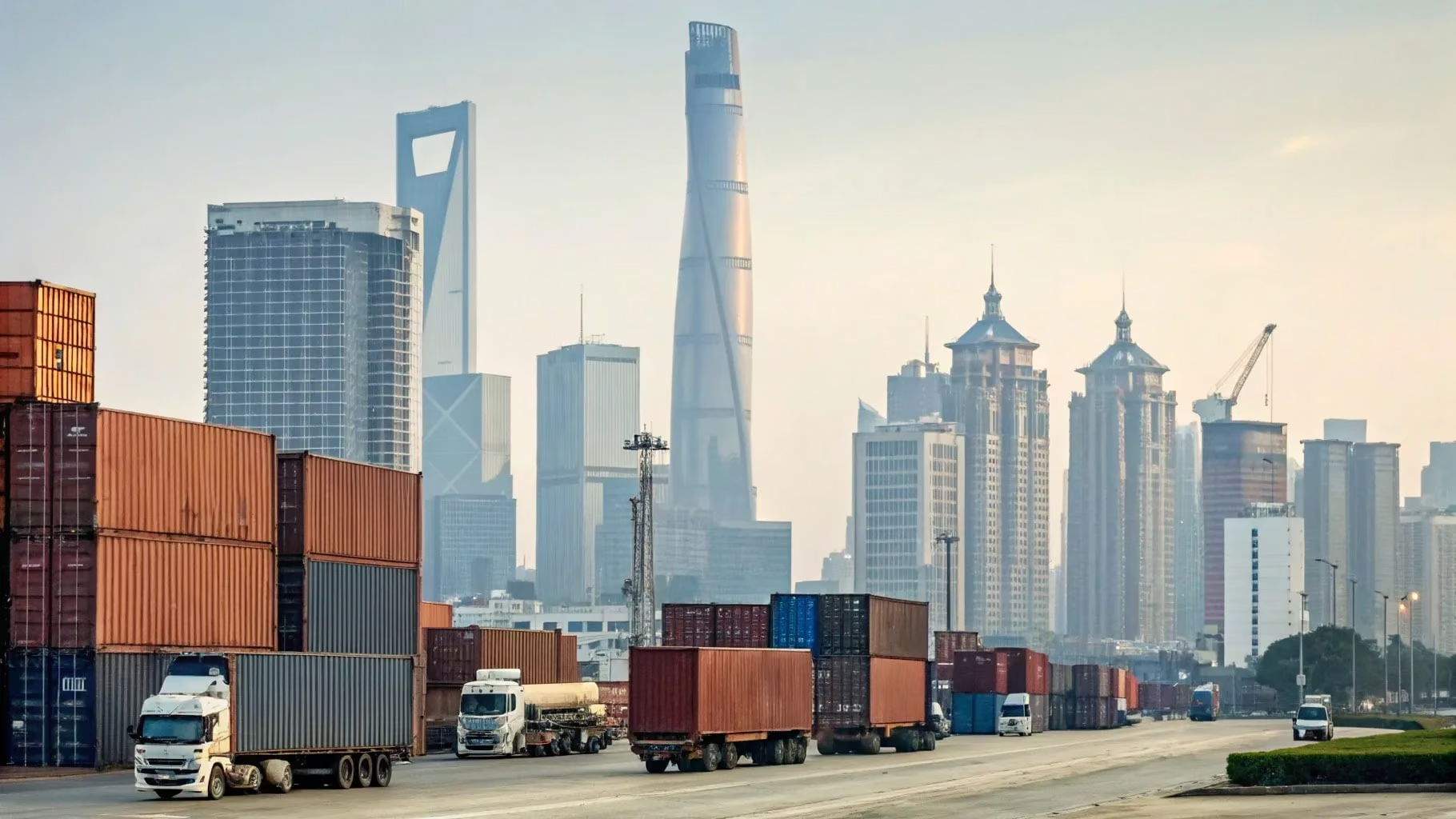
In today’s global economy, tariffs can significantly impact businesses, especially small importers. However, it turns out that some of the world’s largest brands have discovered ways to navigate these financial hurdles with remarkable skill. This article delves into the tactics employed by notable companies to minimize their tariff liabilities, revealing how they manage to save millions while small businesses struggle under the weight of high tariffs. These strategies are not just the domain of Fortune 500 companies; small businesses can leverage them too. Understanding these approaches could transform how you view your own import costs and strategies.
Table of Contents
- The First Way Big Companies Dodge Tariffs
- The 2nd Strategy Big Brands Use
- The Next Strategy
- The Next Move
- Paperwork Trick
- The Final Way Companies Are Dealing With Tariffs
- Conclusion
- FAQs
The First Way Big Companies Dodge Tariffs
One of the primary methods large companies use to avoid high tariffs is known as tariff engineering. This strategy involves designing products in such a way that they fall into a lower tax category. A prime example of this is Converse’s All Star Chucks. These iconic shoes feature fuzzy soles, which may seem like a design choice for comfort, but they are actually a calculated move to save on import taxes. By covering more than fifty percent of the sole with felt, Converse manages to classify the shoes as slippers under U.S. customs rules, significantly lowering their import tariff from as high as 37.5% to just 3%. This clever maneuver exemplifies how subtle design changes can lead to substantial financial savings when dealing with tariffs.
Moreover, Columbia Sportswear has taken tariff engineering to an even more intricate level. Their design team collaborates closely with merchandisers, developers, and customs specialists to ensure that every product is optimized for the lowest possible tariff. For instance, certain women’s garments with pockets below the waist qualify for lower duty rates than those without. Columbia strategically adds small pockets to some shirts—not for functionality, but to achieve better tariff classifications. This practice can reduce potential tariffs from 26.9% to below 16%. The implications of these design decisions are massive, especially when multiplied across thousands of units sold.
The 2nd Strategy Big Brands Use
The next significant strategy used by large brands is the first sale rule. This rule allows companies to calculate tariffs based on the original manufacturer’s price instead of the marked-up price paid to suppliers. This can lead to dramatic savings for businesses. For instance, if a product is purchased from a supplier for $20, and the tariff is 25%, the importer pays $5 in tariffs. However, if the supplier serves as the importer of record and pays the tariff based on their cost of $10 instead, the tariff drops to just $2.50. This method is perfectly legal, provided the necessary documentation is maintained, and can save businesses thousands of dollars.
Many new importers overlook this opportunity, but it’s essential to ask your supplier for a delivery duty paid (DDP) quote. This not only clarifies the costs but also ensures that tariffs are calculated on the lower price, ultimately saving money. By leveraging the first sale rule, businesses can maintain their profit margins, even in a challenging tariff environment.
The Next Strategy
Another powerful tactic is the duty drawback system. This allows businesses that import goods into the U.S. and later export or destroy those goods to file a claim for refunds on the duties paid. The potential for refunds can reach up to 99% of the duties paid, which is a significant incentive for businesses to understand and utilize this process. For instance, consider a company that imports 10,000 bottles, paying a total of $5,000 in tariffs. If they later export 2,000 of those bottles, they could be eligible to reclaim nearly $990 in duties. The key is having proper documentation, including shipping records and invoices, to support the claim. This strategy not only recoups costs but also encourages businesses to explore international markets without the burden of excessive tariffs.
The Next Move
Beyond these strategies, companies can also change a product’s entire identity to enjoy lower tariffs. Tariffs are often based on the country of origin, and if a product is made in a country with high tariffs, it can lead to substantial costs. However, if that same product undergoes substantial transformation in a country with lower tariffs, it can be classified differently. For example, if a company imports parts from China and assembles them in Mexico, the final product may be classified as Mexican, allowing it to benefit from lower tariffs.
This tactic is particularly useful given the complexities of international trade. By understanding how substantial transformation is defined, companies can effectively bypass high tariffs on their imports. It’s a legitimate strategy that requires careful planning and execution, but when done correctly, it can significantly reduce the cost of goods sold.
Paperwork Trick
Another often-overlooked strategy is the unbundling strategy. When importing products, the total invoice price may include various costs that are not taxable. By breaking down these costs on paper, importers can ensure they only pay duties on the taxable amounts. For instance, if a company imports a smart speaker for $100, which includes $80 for the product, $10 for software, and $10 for R&D reimbursement, they could declare only the $80 if they structure the invoice correctly. This reduction can lead to a tariff bill that is 20% lower or more, providing substantial savings.
It’s important to note that unbundling is not about evading taxes but rather about accurately declaring what is taxable. This precise approach can lead to significant cost reductions, which are critical for maintaining competitive pricing in a challenging market.
The Final Way Companies Are Dealing With Tariffs
Lastly, in response to rising tariffs, some companies have resorted to shrinkflation. This tactic involves subtly reducing the size or quantity of a product while keeping the price the same. For example, restaurants may reduce portion sizes but use larger plates to make it less noticeable. Similarly, online retailers may exclude non-essential items from their shipments, or toy companies might downgrade packaging materials to maintain profit margins.
While this strategy is less sophisticated than tariff engineering or using bonded warehouses, it is becoming increasingly common as businesses strive to stay afloat amidst rising costs. It’s a reminder that in times of economic challenge, companies may need to adapt their practices, even if it means sacrificing some aspects of product quality or presentation.
Conclusion
Understanding the strategies that big brands employ to navigate tariffs can provide valuable insights for small businesses and entrepreneurs. Whether it’s through tariff engineering, leveraging the first sale rule, utilizing duty drawbacks, or employing unbundling tactics, there are numerous ways to minimize tariff expenses legitimately. As tariffs continue to evolve, awareness and adaptability will be key for businesses looking to thrive in a competitive landscape.
By embracing these strategies, small importers can turn what seems like a financial burden into a competitive advantage, ensuring that they not only survive but thrive in an increasingly complex global market. With the right knowledge and tools, the daunting world of tariffs can become an area of opportunity rather than an obstacle.
FAQs
What is tariff engineering?
Tariff engineering is the practice of designing products in a way that allows them to qualify for lower tariff rates when imported. This often involves changes in product design or materials to meet specific customs classifications.
How does the first sale rule work?
The first sale rule allows importers to calculate tariffs based on the original manufacturer’s price rather than the price paid to the supplier. This can lead to significant savings on duties.
What is a duty drawback?
A duty drawback is a refund of duties paid on imported goods that are later exported or destroyed. Companies can claim back up to 99% of the duties paid if they have the necessary documentation.
What is unbundling in customs valuation?
Unbundling refers to the practice of separating non-taxable costs from the taxable value of an imported product to reduce the amount on which duties are calculated.
What is shrinkflation?
Shrinkflation is the practice of reducing the size or quantity of a product while maintaining the same price. This is often used by companies to absorb rising costs without overtly raising prices.
