

If you sell on large marketplaces you need a clear plan. Major platforms adjust rules and fees at times when many sellers are busy and less likely to notice. These changes can create immediate cash stress and ongoing revenue loss. This article explains the common policy moves, gives specific steps to protect cash and listings, and lays out a practical path to reduce reliance on any single marketplace.
Table of Contents
- Who this guide is for and why it matters
- How marketplaces use timing and framing to change rules
- Common policy moves that cost sellers money
- Platform specific changes to watch for now
- How to calculate the real cost of a policy change
- Immediate checklist to protect cash and listings
- Cash flow strategies sellers can use right now
- Ad spend and campaign management best practices
- Shipping pricing and search placement tactics
- How to dispute incorrect platform charges and get refunds
- Long term plan to reduce dependence on any single marketplace
- How to measure success and know when to shift strategy
- Common mistakes sellers make after a policy change
- Practical seller scenarios and how to respond
- Where to focus resources first
- Regulatory and legal options to consider
- Checklist to prepare for holiday season policy risk
- FAQ
- Final checklist and summary
Who this guide is for and why it matters
This guide is for small and medium sellers who rely on Amazon, eBay, Etsy or similar marketplaces. Use it if you want to:
- Understand recent platform changes that affect payouts fees and search placement
- Protect cash flow and seller protections from sudden rule updates
- Build systems that spot and respond to risky policy changes quickly
How marketplaces use timing and framing to change rules
Platforms have two advantages when updating policy. One they control the terms of service for seller accounts. Two they have the timing edge. Announcing an update during heavy fulfillment periods reduces immediate pushback. Companies also frame changes as improvements for buyers or as seller friendly. That framing can hide the actual cost to sellers. Expect this pattern to repeat.
Common policy moves that cost sellers money
Here are the specific types of moves to watch for and why each matters.
- Slowing payouts. Delayed disbursements tie up working capital and let the platform earn interest on seller funds.
- Reducing seller protections. Stricter refund timelines or limits on reimbursement claims increase loss from fraud and returns.
- Changing ad billing or budget rules. New billing mechanics can make campaigns cost more than expected.
- Search ranking criteria tied to shipping or price. Forcing low shipping costs or free shipping can reduce seller margins or hide listings.
Platform specific changes to watch for now
Below are the practical effects of the most common updates and what to do first.
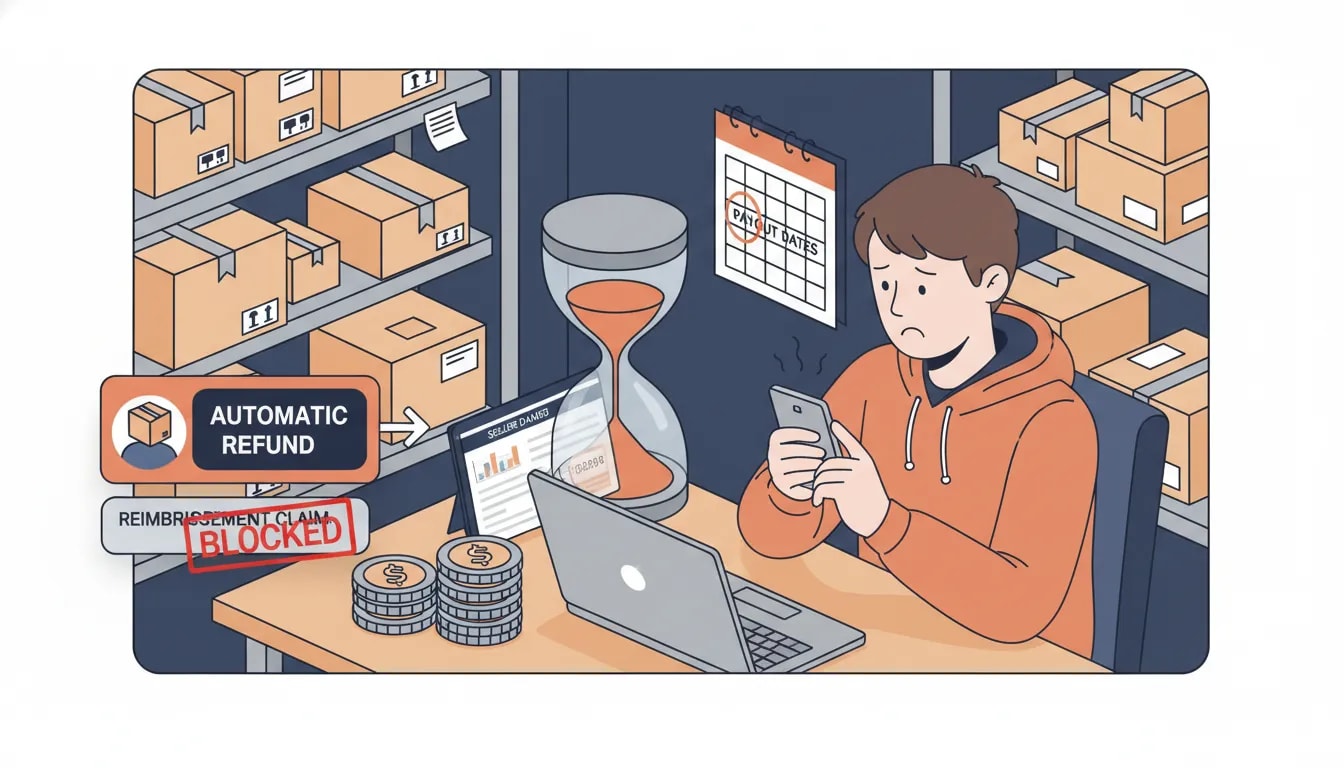
Amazon: slower payouts and tightened refund protections
What to watch for
- Longer disbursement windows for payouts after each sale
- Automatic refunds to buyers when sellers miss a narrow processing window
- Loss of ability to file reimbursement claims when the platform issues the refund
Why this matters
Longer payout windows create a working capital gap. For sellers who use their sales to buy inventory pay for packing or pay staff the gap can force borrowing. When thousands of sellers face the same delay the platform holds a substantial cash pool during the delay period. That pool can earn interest or be used for short term cash management.
When refund processing windows shrink or when platforms automatically refund customers this shifts the risk to sellers. If a platform refunds a buyer and then blocks a seller from filing a reimbursement claim the seller eats the cost of return fraud or buyer abuse.
Immediate actions
- Monitor your payout schedule. Check the dates your platform posts funds and the holding duration. Export payout reports weekly.
- Create a payout calendar. Map expected deposit dates and add a buffer of at least seven days for planning purchases and payroll.
- Document everything. Save screenshots of order details delivery confirmation and return scanning timestamps in a simple folder for each order. If a refund posts automatically you need that evidence to contest it.
- File disputes quickly. If a refund happens and you have proof file the claim immediately. Use every channel for escalation email phone and seller support forms. Keep the ticket numbers.

eBay: ad credits confusion and changing budget rules
What to watch for
- Promotional credits that appear as separate offers across dashboards
- Changes to how daily budgets are enforced so the platform can exceed daily caps while keeping a monthly average
- Delayed or slow refunds for incorrectly charged ad spend
Why this matters
Confusing promotional offers can lead sellers to accept duplicate credits that the platform later refuses to honor. A daily budget that becomes a monthly average lets the platform accelerate spend in a short period causing surprise charges on statements. Slow customer support response makes it costly to recover the money.
Immediate actions
- Take screenshots before you opt in. Capture the entire dashboard page the offer buttons and any fine print. Timestamp these screenshots.
- Set strict alerts for ad spend. Check your ad spend multiple times per day during new campaigns. If the platform offers an API use it to build an automated alert whenever spend exceeds a threshold.
- Use conservative budgets. Lower the daily target to a number you can tolerate for several days. If the platform changed daily budget rules treat the number as a soft guide and assume it can spike.
- Open dispute channels fast. If you see unexpected charges open a dispute case attach screenshots and keep a record of timestamps.

Etsy: shipping based ranking and price pressure
What to watch for
- Search ranking favoring listings with very low shipping costs
- Algorithmic penalties for listings with shipping above a set threshold
- Timing messages that urge sellers to lower shipping right after major rate increases from carriers
Why this matters
Many items sold on craft marketplaces are bulky or fragile and true shipping costs exceed low thresholds. When the platform prioritizes listings with low shipping fees sellers face two bad choices. Either cut shipping to meet the threshold and accept a loss or keep accurate shipping and lose traffic. If the platform still takes a commission on total sale value for orders where the seller subsidized shipping the marketplace effectively gets more profit at the seller expense.
Immediate actions
- Test shipping profiles. Create multiple shipping templates to see how search position changes. Use a control listing to measure clicks after adjustments.
- Consider including shipping in the price. Raise the item price and mark shipping as free. Test conversion rate before and after. Many buyers prefer a single price labeled free shipping.
- Offer local pickup delivery or flat rate options. For heavy items local pickup or scheduled local delivery can bypass platform shipping rules and save money for both sides.
- Communicate with customers. Use product descriptions to explain the care and cost of shipping to set expectations and reduce disputes.
How to calculate the real cost of a policy change
Work through a simple example to understand the cash impact of slower payouts.
- Find your average weekly sales amount. Example 5000 dollars.
- Find the new payout delay in days. Example 7 days.
- Calculate the extra cash held: average daily sales times delay. For 5000 per week daily sales are 714 so seven days of hold equals 5000.
- Assess financing cost. If your cost of capital is 6 percent annual the weekly interest on 5000 is roughly 5.77 dollars per week or 300 dollars per year. This ignores opportunity cost and the operational friction of not having those funds when you need them.
Multiply that effect across all sellers and you see how platforms can create large pools of working capital. For individual sellers the real harm comes from the mismatch between when you need paying and when the platform pays.
Immediate checklist to protect cash and listings
- Export transaction and payout reports weekly and keep them for at least one year.
- Enable two factor alerts on your seller accounts for any changes or big transactions.
- Set daily review time during high season. Even 15 minutes each morning catches most surprises.
- Keep a 30 day reserve of operating cash to cover inventory payroll and returns.
- Document promotional opt ins with screenshots before clicking accept.
- Use third party tools to monitor ad spend and account health if you cannot log in frequently.
Cash flow strategies sellers can use right now
Build a short term plan to survive changes and a medium term plan to recover margin.
Short term
- Raise a temporary buffer. Move 15 to 30 percent of cash on hand into a separate account for platform delays and unexpected ad charges.
- Delay non critical purchases such as new tooling or expansion orders until your payout timing stabilizes.
- Temporarily reduce ad spend or pause campaigns that are not profitable on current ROAS.
- Use a short term line of credit rather than high interest credit cards when you need breathing room. Shop rates and fees first.
Medium term
- Negotiate net terms with suppliers. Moving from prepayment to net 30 gives you more room to manage payouts.
- Set target cash reserves. Aim for 30 to 90 days of operating expense covered in an account separate from daily working funds.
- Consider invoice financing if you have large purchase orders locked up in platform payouts.
Ad spend and campaign management best practices
Ad platforms will change billing rules. Build a process that survives surprise billing models.
- Assume worst case when you launch. Treat your daily cap as a soft cap and expect spend spikes.
- Use automated rules to pause campaigns when spend exceeds a set threshold or when cost per sale exceeds a target.
- Export spend and conversion data daily for the first two weeks after launch or after policy changes.
- Keep detailed notes on promotional credits and expire dates so you can prove what you accepted.
- Set separate payment methods for ad platforms and for marketplace fees where possible. This limits surprise charges to one account.
Shipping pricing and search placement tactics
If a marketplace favors low shipping cost listings try these steps to protect traffic and margin.
- Test free shipping by including it in the price. Run A B tests for at least two weeks and compare conversion and average order value.
- Use calculated shipping templates so the buyer sees accurate rates at checkout rather than a flat low rate that eats margin.
- Offer multiple shipping options such as economy expedited and local pickup to give customers choices and to preserve margin on heavier items.
- Bundle or group products to increase item value while spreading shipping cost across more items.
- Work with a shipper to negotiate lower rates when you reach volume thresholds or to get discounted insurance on fragile goods.
How to dispute incorrect platform charges and get refunds
When a platform charges you unexpectedly follow a methodical approach to increase the odds of a refund.
- Collect proof immediately. Screenshots of the offer ad view and any confirmation screens are essential.
- File a seller support ticket with the platform and attach the proof. Use the platform form so the case gets a number.
- Follow up publicly when private support stalls. Post a concise thread on a seller forum or social channel with your ticket number. Platforms watch public relations hits.
- Escalate to senior support or account manager if available. Be calm factual and persistent.
- Consider a chargeback as a last resort only if the platform refuses to resolve the issue and your payment processor allows it. Know the risks including potential account penalties.
Long term plan to reduce dependence on any single marketplace
Complete independence is rare. The goal is to diversify so one policy change does not end your business.
Step 1 build an owned sales channel
Start a simple store using Shopify WooCommerce or another ecommerce platform. Prioritize speed not perfection at first. You need a place to collect buyer email addresses and test price points.
Step 2 capture first party customer data
Collect emails and phone numbers at checkout. Offer simple incentives such as 10 percent off first order to start a loyalty list. Treat that list as your most valuable asset.
Step 3 invest in owned traffic
Run small consistent campaigns to your owned store. Use search ads social ads and email. Paid traffic alone will not scale your brand but it reduces reliance on marketplace discovery algorithms.
Step 4 continue to list on marketplaces
Use marketplace channels for reach not as your only channel. Keep listings active and optimized but funnel repeat buyers to your site with incentives and a loyalty program.
Step 5 build operations that scale
Move towards regular inventory forecasting multi channel order management and standard operating procedures. These systems let you move faster when policies change.
How to measure success and know when to shift strategy
Track a few core metrics weekly and monthly. If these move against you adjust quickly.
- Gross margin per channel after platform fees and shipping
- Cash conversion cycle time between purchase of inventory and receipt of customer cash
- Customer acquisition cost by channel compared to lifetime value
- Percentage of sales on owned site aim to increase this each quarter
- Return and dispute rate watch for sudden spikes after policy changes
Common mistakes sellers make after a policy change
- Reacting emotionally and pausing all sales. Do not stop fulfilling orders unless the platform forces it.
- Neglecting documentation. Without logs screenshots and reports you weaken any dispute.
- Assuming one size fits all. A tactic that works for light items may bankrupt you for heavy items.
- Putting all marketing budget on marketplace ads so you lose owned traffic growth.
- Not testing pricing and shipping changes. Small tests tell you which option keeps both traffic and margin.
Practical seller scenarios and how to respond
Scenario A sudden ad overcharge after accepting multiple credits
Action steps
- Export the campaign log and take screenshots of the dashboard showing the credits and separate opt in buttons.
- Pause the campaign to stop further spend.
- Open a formal dispute attaching the screenshots and the campaign id numbers.
- If support stalls post a concise public message with ticket id on the platform community and tag support channels.
- Move future ad spend to a test campaign on another platform until the issue resolves.
Scenario B automatic refunds disabled your reimbursement right
Action steps
- Make a procedure to inspect returns daily during peak season and assign a person to file any safety claims within the allowed window.
- Keep records of delivery confirmation photos return packing scans and any buyer messages.
- If a refund posts without your input escalate with proof and ask for a written policy explanation so you can plan future controls.
- Adjust return policy language on your listings to reduce fraud risk including clearer return instructions and packaging requests.
Scenario C search ranking drops because of shipping rules
Action steps
- Test offering free shipping by bundling the cost into the item price on a small set of listings.
- Measure click through and conversion changes for two weeks to assess impact.
- If conversion falls too much revert and try tiered shipping templates or local pickup options.
- Communicate to customers why shipping cost exists to reduce cancellations and disputes.
Where to focus resources first
With limited time and cash focus on three things in sequence.
- Stabilize cash flow with a short term reserve and tighter payout monitoring.
- Protect current listings by documenting offers and pausing risky campaigns.
- Start building owned channels even if small. Collect emails and build one or two landing pages now.
Regulatory and legal options to consider
Regulation of marketplaces is evolving. For most sellers the fastest remedies remain seller support formal dispute channels and public pressure. If the dollar amount is large consider these options in order.
- Escalate within the platform to a senior account manager if you have one.
- File complaints with consumer protection agencies or trade groups when a pattern emerges across many sellers.
- Seek legal counsel if the platform refuses a reasonable correction and the financial impact justifies the cost.
- Join a sellers group to coordinate evidence and complaints. Many platforms respond faster to organized groups.
Checklist to prepare for holiday season policy risk
- Export and archive your payout and order reports monthly
- Build a 30 day operating reserve before peak season
- Designate a person to check accounts daily during heavy periods
- Create templates with screenshots for promotional offers before opting in
- Test shipping and pricing strategies on a small sample of listings
- Start a simple landing page to collect email addresses now
FAQ
How much faster should I check my seller accounts after a policy change
Check critical dashboards once per day during the first two weeks after a platform update. During peak season check twice per day. Focus on payouts ad spend and messages for returns or disputes.
Can I force a marketplace to refund a wrong charge
You cannot force a platform but you can increase the odds of a refund. Provide clear evidence request a case number escalate to senior support and use public complaint channels if private support stalls. File a chargeback only as a last resort because it can trigger account review.
Is it better to include shipping in the price or to list shipping separately
Test both. For low priced items including shipping and showing free shipping often increases conversions. For large or heavy items calculated shipping keeps margins clearer. Use A B testing to find what works for your products and buyers.
How much cash reserve should a marketplace seller keep
Aim for at least 30 days of operating expense. If you have high inventory replenishment costs aim for 60 to 90 days. The exact number depends on your sales cadence supplier terms and how quickly platforms pay out.
What if a platform changes rules frequently
Automate monitoring and diversify channels. Build a routine to export changes once per week assign ownership for account reviews and scale your owned traffic to reduce reliance on platform discovery.
Should I stop selling on marketplaces after a bad change
Not usually. Marketplaces still provide reach. The goal is to reduce risk not cut out channels. Keep selling while you build an owned store and drive repeat buyers away from the marketplace when possible.
Final checklist and summary
Policy changes will happen again. The question is whether you react or prepare. Use this short list to act now.
- Make a payout calendar and add a buffer for new delays
- Keep a 30 day cash reserve and open a short term line of credit if needed
- Document offers and changes with screenshots and time stamps before you accept promotions
- Automate monitoring of ad spend and orders during major sales periods
- Start an owned channel and collect emails now so you control customer access
Platforms will update rules. When they do your best defense is simple systems steady documentation and diversified sales channels. Follow the steps in this guide to reduce surprise charges and protect both cash and profit.
